Prep Time: 5 minutes | Serves: 2 | Category: Mocktails
It was a backyard birthday party in late July — the kind where the fairy lights go up before sunset and someone’s always in charge of the speaker. I’d brought a big pitcher of this watermelon mocktail recipe to share, partly because I’d been obsessed with it for weeks, and partly because I wanted to see what would happen. What happened was this: three people came up to me within the first hour to ask what was in it. One of them — a close friend who knows I don’t drink — genuinely looked confused when I said there was no alcohol. “But it tastes like a cocktail,” she said. “Like, a good cocktail.” I’ve heard some version of that reaction every single time I’ve made this drink since.
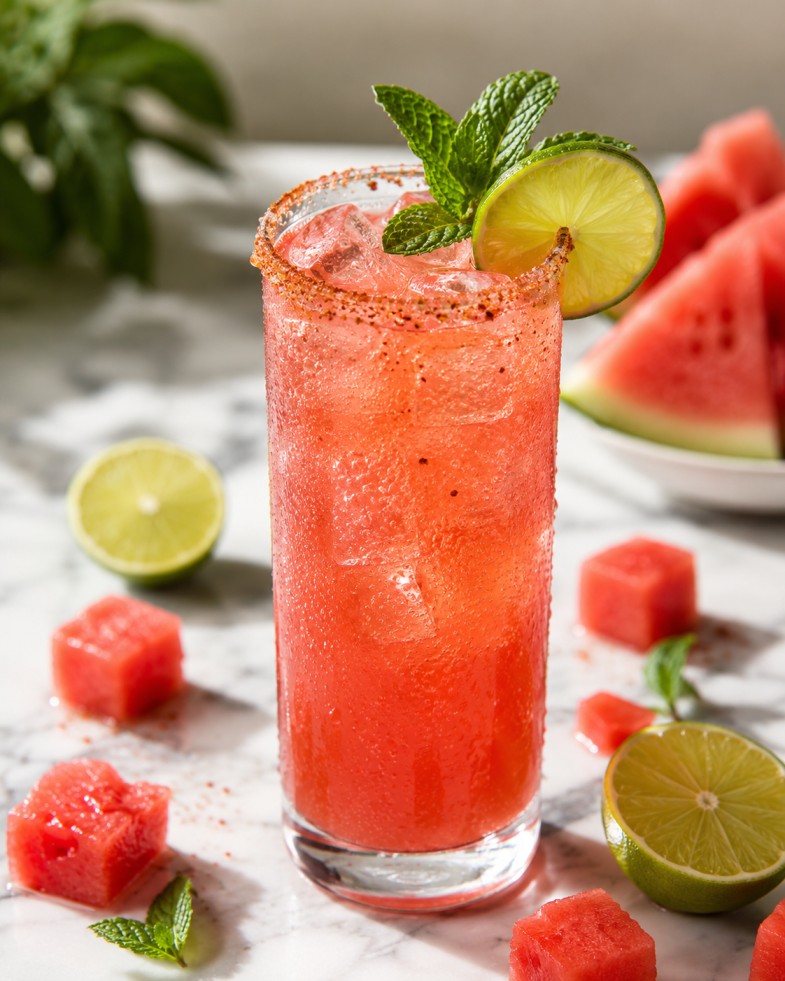
There’s something about fresh watermelon juice blended with lime, muddled mint, and sparkling water that creates a combination your brain reads as sophisticated. It’s sweet but not cloying. It’s cold and fizzy without tasting like soda. The color is this vivid coral-pink that looks almost too pretty to drink. And the flavor — bright, fresh, slightly floral from the mint, with a clean citrus finish from the lime — just works in a way that’s hard to explain until you’ve tried it. I’ve served it to people who actively dislike mocktails, and they’ve finished the glass.
What makes this particular watermelon mocktail recipe so good is that it’s genuinely easy to make and genuinely hard to mess up. Five minutes, a blender, a strainer, and about six cups of fresh watermelon. That’s it. No fancy syrups to make ahead, no equipment you don’t already have. The only rule — and I’ll explain exactly why it matters — is that you have to use fresh watermelon. Not bottled. Not from a carton. Fresh.
Why Fresh Watermelon Makes This Work
Every time I see this recipe made with bottled watermelon juice, I understand why people try it — it’s faster and easier and seems like it should taste the same. It doesn’t, and the difference isn’t small.
Fresh watermelon is mostly water (about 92%), which sounds like a drawback until you realize that water is the vehicle for everything that makes watermelon taste like watermelon. When you blend fresh watermelon and strain it, you get a juice that is intensely aromatic, slightly floral, and naturally sweet in a way that feels clean rather than heavy. The flavor compounds responsible for that iconic summer-watermelon smell — primarily a group of aldehydes and alcohols that develop only in fresh, ripe fruit — start to degrade within hours of processing. By the time watermelon juice has been pasteurized, packaged, and sat on a shelf or in a refrigerator case, those volatile aromatics are mostly gone. What you’re left with is sweet and pink, but flat in the same way that canned peaches are flat compared to a ripe peach off a tree.
There’s also L-citrulline to consider, an amino acid found naturally in high concentrations in fresh watermelon that gives the juice a subtle mineral-almost-savory depth that rounds out the sweetness. L-citrulline content drops significantly with heat processing, which is why pasteurized watermelon products taste one-dimensional by comparison. And fresh-blended watermelon contains active enzymes — including small amounts of bromelain-like proteolytic enzymes — that continue to interact with the other ingredients in your drink, particularly the lime juice, creating a flavor complexity that processed juice simply can’t replicate.
The practical upshot: bottled watermelon juice makes a fine pink lemonade situation. Fresh watermelon juice makes a sparkling watermelon drink that tastes like summer decided to show up in a glass. Use fresh. It’s worth the extra five minutes.
Ingredients
For 2 servings:
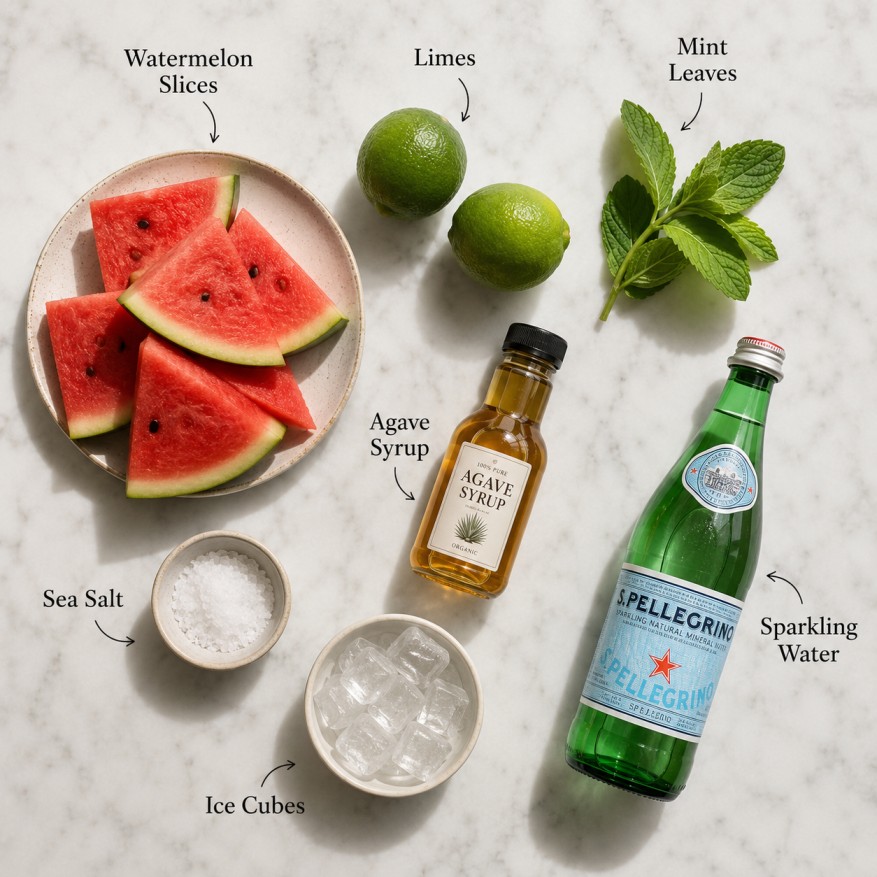
- 3 cups fresh watermelon, cubed — This is about ¼ of a small seedless watermelon, or a generous wedge from a larger one. Choose a watermelon that feels heavy for its size — that weight means water content, which means flavor. The flesh should be deeply red-pink. Pale or white watermelon will produce a watery, bland juice regardless of how ripe it looks on the outside. If you’re buying a pre-cut watermelon, smell it — ripe watermelon has that distinctive sweet-fresh smell even through the plastic wrap.
- 1½ oz (45ml) fresh lime juice — About 2 medium limes. Fresh is non-negotiable here. Bottled lime juice has been processed and preserved in a way that strips out the volatile aromatics responsible for the bright, slightly floral quality of fresh lime. In a drink this simple and clean-flavored, the difference between fresh and bottled citrus is immediately obvious. Squeeze your limes and taste the juice before adding — you want it bright and sharp, not bitter or flat.
- 8–10 fresh mint leaves — Spearmint is classic and what you’ll find in most grocery stores; it has a clean, slightly sweet mintiness that complements watermelon beautifully. Peppermint is stronger and can overpower the watermelon, so use it sparingly if that’s what you have. Don’t use dried mint — it tastes medicinal and the texture in a cold drink is unpleasant.
- 1 tablespoon agave syrup — Agave has a mild, neutral sweetness that doesn’t compete with the watermelon the way stronger sweeteners can. It dissolves instantly in cold liquid, which is the practical reason it beats granulated sugar here. If your watermelon is very sweet and ripe, taste the blended juice before adding the full tablespoon — you may want less. Simple syrup (equal parts sugar and water, dissolved) is a fine substitute if agave isn’t something you keep on hand.
- 1 cup sparkling water — Plain sparkling water, not flavored. The carbonation is doing important textural work here, adding the effervescence that makes this drink feel like something celebratory rather than just blended fruit. San Pellegrino and Topo Chico hold their bubbles well and have a minerality that works nicely with watermelon. If you have a SodaStream, freshly carbonated water at the highest carbonation setting is excellent.
- Pinch of sea salt — This is the quiet ingredient that most people skip and most people would miss if you left it out without telling them. Salt at trace levels enhances sweetness and suppresses bitterness, making the watermelon flavor taste more intensely of itself. Don’t skip it. You are not making the drink salty — you are making it taste more watermelon-y.
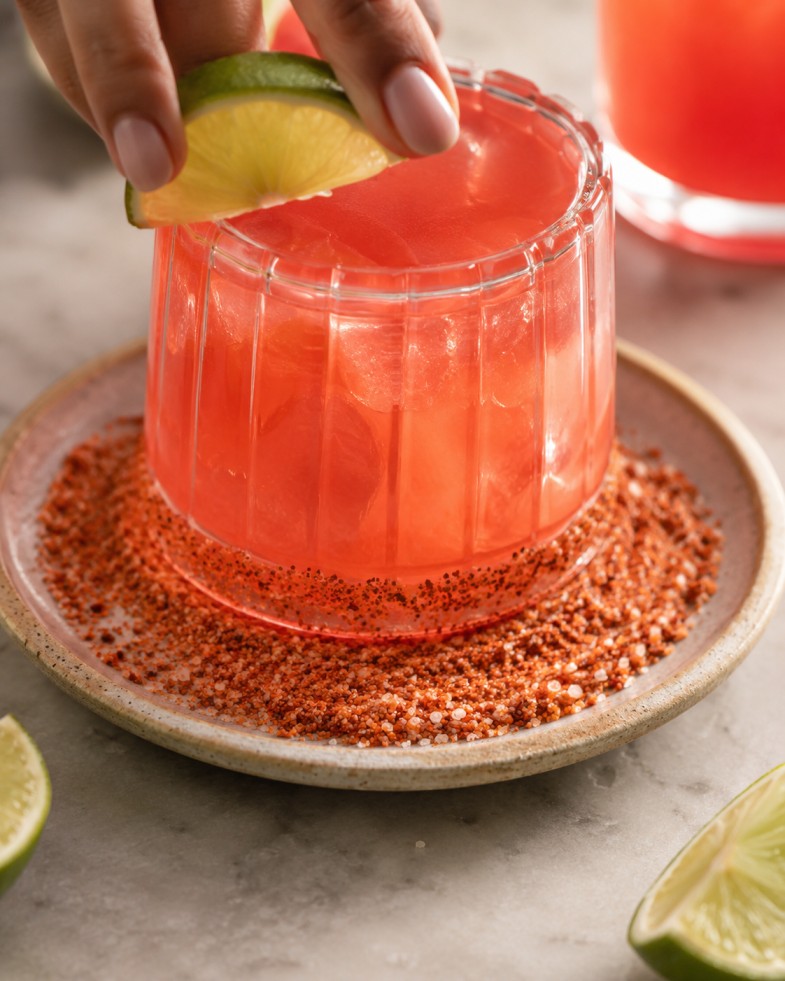
- Salt rim (optional) — A Tajín-salt rim (half Tajín, half flaky sea salt mixed together on a plate) adds a chili-lime quality that plays beautifully against the sweetness of the watermelon. Highly recommended if you have Tajín. Rimming the glass takes thirty seconds and visually signals that this is a real drink, not just juice.
- Ice and mint sprigs for garnish — Use plenty of ice. A sprig of fresh mint slapped against your palm before garnishing releases the oils and amplifies the mint aroma with every sip.
How to Make It
Step 1: Blend the watermelon.
Add your 3 cups of cubed watermelon to a blender. Do not add any liquid — the watermelon has more than enough moisture on its own, and adding liquid before blending makes the juice harder to strain clearly. Blend on high for 20–30 seconds until completely smooth. The color should be a vivid, slightly opaque coral-pink.
Step 2: Strain for clear juice.
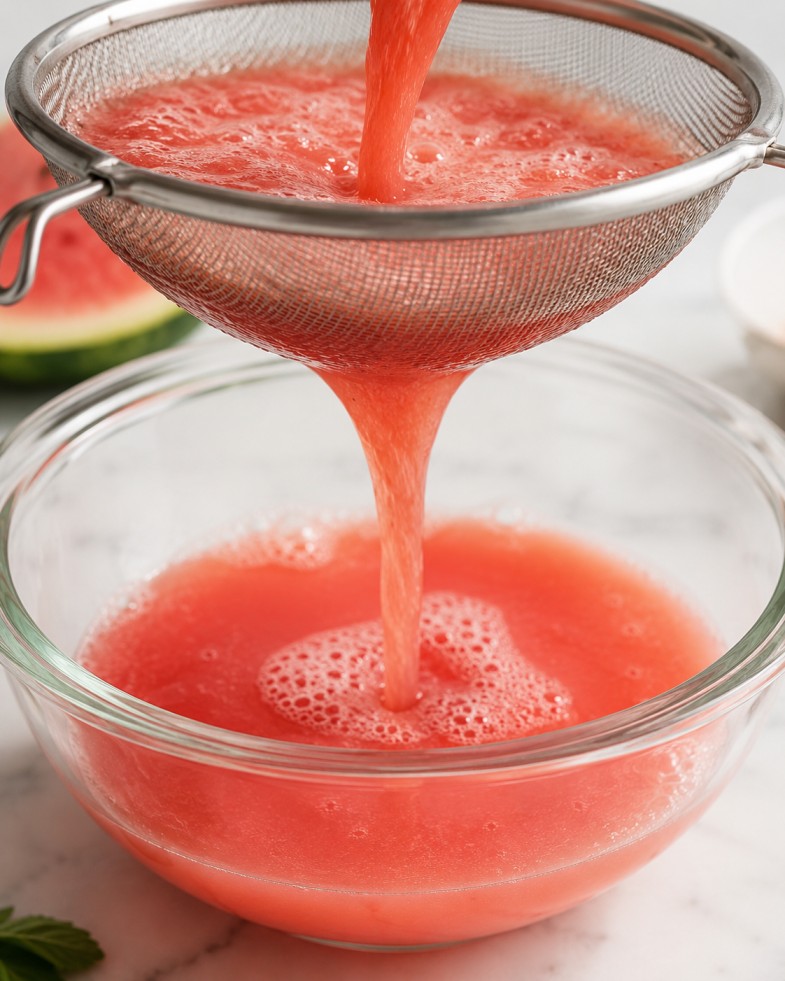
This step is what separates a beautiful, clear sparkling watermelon drink from a murky smoothie situation. Set a fine-mesh strainer over a bowl or large measuring cup and pour the blended watermelon through it. Use the back of a spoon to press the pulp gently against the strainer, extracting as much juice as possible without forcing the pulp solids through. You’ll get roughly 1 to 1½ cups of clear juice from 3 cups of watermelon. Discard the pulp (or add it to smoothies — it still has fiber and flavor). If you want an even clearer juice, line the strainer with a piece of cheesecloth before straining.
Step 3: Muddle the mint.
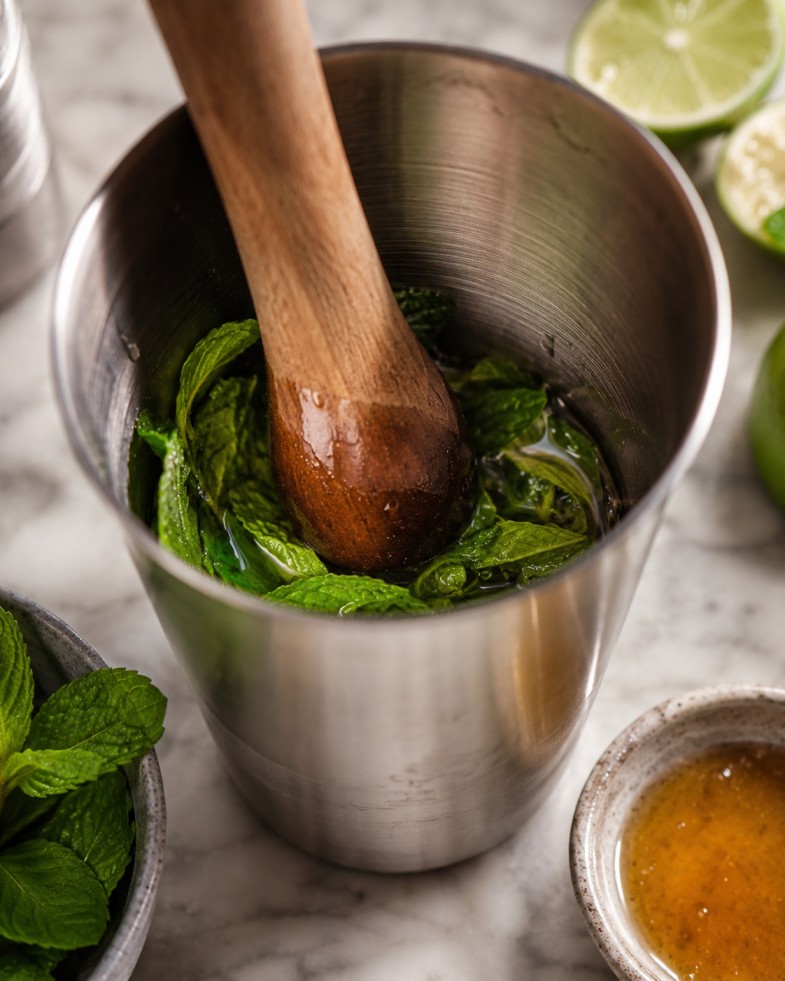
Place your 8–10 mint leaves in the bottom of a cocktail shaker or a medium bowl. Add the agave syrup and use a muddler or the back of a wooden spoon to press and twist the mint against the bottom — you want to bruise the leaves enough to release their oils, but not pulverize them into green shreds. Over-muddling releases chlorophyll and makes the mint taste vegetal and slightly bitter. Ten to fifteen seconds of gentle pressing is enough.
Step 4: Combine and shake.
Add the strained watermelon juice, fresh lime juice, a pinch of sea salt, and a small handful of ice to the shaker with the muddled mint. Shake for 10–15 seconds. The shake accomplishes two things: it chills the mixture quickly and it integrates the lime and agave into the watermelon juice evenly.
Step 5: Build the drinks.
If you’re doing a salt or Tajín rim, run a lime wedge around the rim of two glasses and press them into the rim mixture before adding ice. Fill each glass with ice. Strain the cocktail shaker mixture equally between the two glasses, leaving out the mint leaves. Top each glass with cold sparkling water — pour it gently down the inside of the glass to preserve the bubbles.
Step 6: Garnish and serve immediately.
Slap a fresh mint sprig against your palm, then tuck it into the ice at the edge of the glass. Add a watermelon wedge or a lime wheel on the rim if you like. Serve immediately — the carbonation is at its best in the first three to four minutes.
The Spicy Version — Watermelon Jalapeño Mocktail
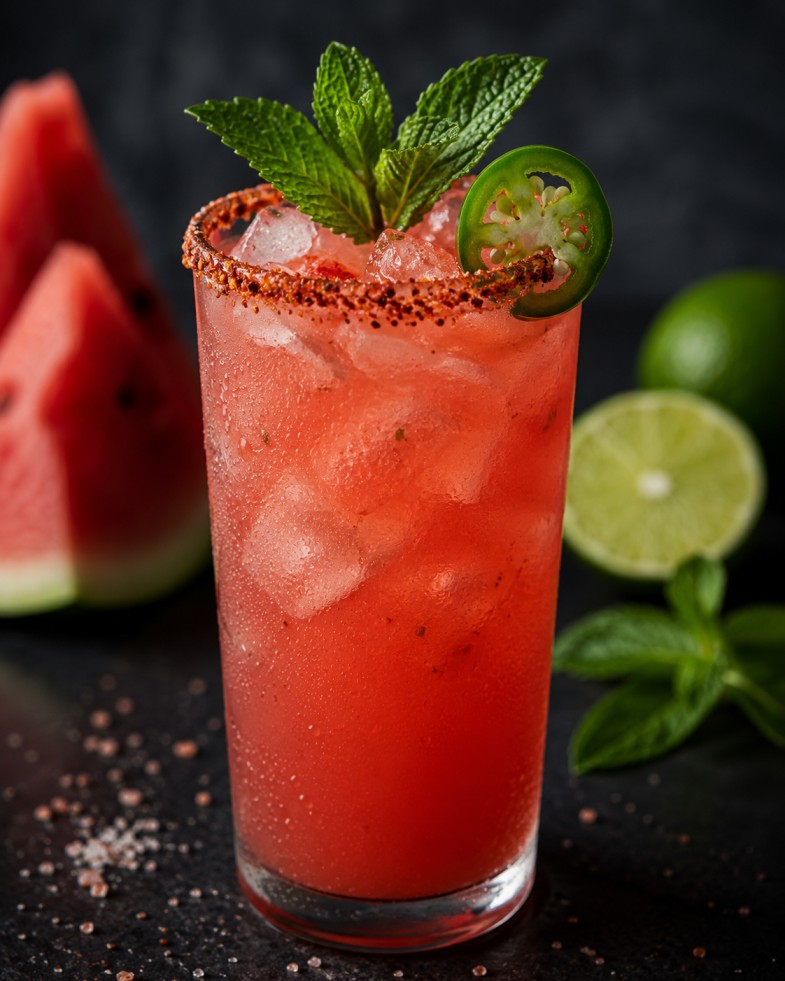
If you’re paying attention to drink trends in 2026, you already know that swicy — the sweet-spicy combination — is everywhere, and watermelon is one of the most natural canvases for it. The pairing of watermelon and jalapeño has been a staple of upscale cocktail menus for years, and this mocktail version captures exactly why it works so well: the chile heat amplifies the sweetness of the watermelon rather than fighting it, and the combination creates a slow, warming finish that makes you reach for the glass again.
What changes: Add 3–4 thin slices of fresh jalapeño (seeds removed for moderate heat, seeds in for real heat) to the shaker when you muddle the mint. Muddle the jalapeño along with the mint — gently, same principle applies, you’re extracting flavor not destroying texture. The jalapeño infuses into the agave and lime over the 30 seconds of muddling and the time in the shaker, producing a drink that has a clean, bright heat that builds slowly at the back of the palate.
What to adjust: Reduce the agave very slightly (to ¾ tablespoon) since the spice will make the sweetness feel more present. Add an extra squeeze of lime — about ¼ oz — to keep the drink bright and prevent the chile heat from becoming the only thing you taste. Everything else stays exactly the same.
How it tastes: The first sip reads as the watermelon mocktail you know — fresh, cold, fizzy. Then the lime and mint arrive. Then, about five seconds later, a gentle warmth starts at the back of your throat and spreads across your palate. It lingers pleasantly rather than burning. The second sip is even better than the first. This is the version that gets the most requests at parties, and it’s consistently the one people refuse to believe doesn’t have tequila in it.
Tajín rim is especially good here — the lime and chili in the Tajín echoes the jalapeño in the drink and creates a full-circle spicy-citrus experience from first touch to last sip.
How to Make It Party Batch Size
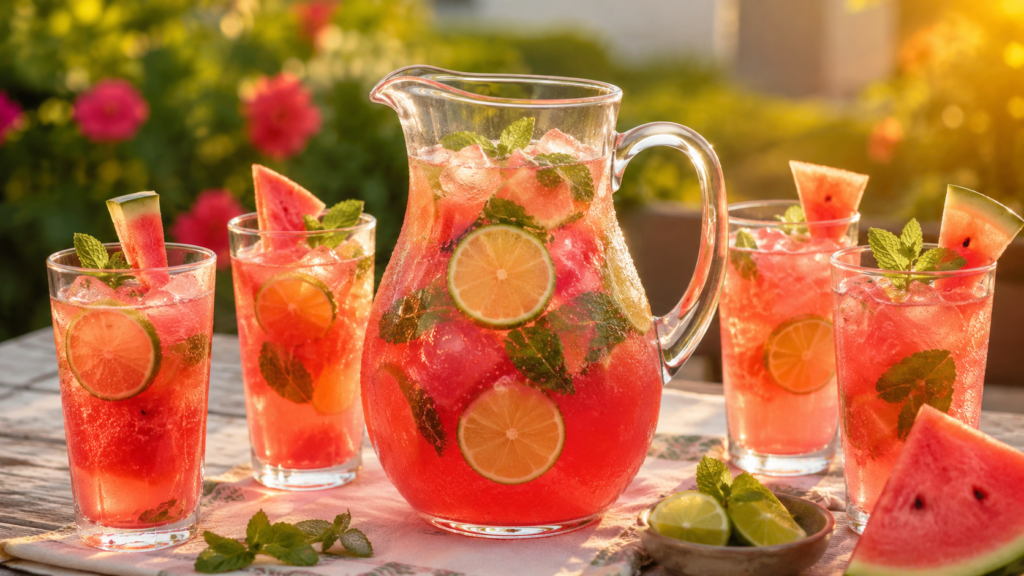
Scaling this up for a crowd is genuinely easy, and making it ahead is completely practical as long as you hold the sparkling water until the last minute.
For 8–10 servings:
- 12 cups fresh watermelon, cubed (about ¾ of a medium seedless watermelon)
- 6 oz (180ml) fresh lime juice (about 7–8 limes)
- 30–35 fresh mint leaves
- 4 tablespoons agave syrup
- 4 cups sparkling water (added at serving time — not ahead)
- 1½ teaspoons sea salt
Method: Blend the watermelon in batches and strain all of it into a large pitcher or mixing bowl — you’ll end up with about 6 cups of strained juice. In a separate bowl or large cocktail shaker, muddle the mint leaves with the agave syrup until fragrant. Add the strained watermelon juice, lime juice, and sea salt to the muddled mint and stir well to combine. At this stage, you can refrigerate the base mixture for up to 4 hours before the party. Keep it covered and cold.
At serving time: Set up a self-serve station with the watermelon base in a large pitcher, a separate bottle or can of sparkling water, ice, and glasses. Let guests pour the base over ice and top with sparkling water to their taste — roughly 2 parts watermelon base to 1 part sparkling water is the right ratio to aim for. Put out lime wedges, fresh mint sprigs, and a Tajín-salt rim plate. Have a second pitcher ready with the jalapeño version labeled, because if you make both, people will want to compare.
Make-ahead note: The strained watermelon juice will start to separate and darken slightly after 4–6 hours in the refrigerator. Give it a good stir before serving and it will be fine — the flavor is not affected. Do not premix the sparkling water into the base; it will go completely flat by the time your guests arrive.
FAQ
Can I use watermelon juice instead of fresh watermelon?
Technically yes, but the result is noticeably different. Bottled and packaged watermelon juice has been heat-processed, which degrades the volatile aromatic compounds responsible for the bright, floral, intensely watermelon-y flavor of fresh juice. Fresh-blended and strained watermelon produces a juice that smells and tastes dramatically more complex and vivid. If fresh watermelon genuinely isn’t available and you have to use packaged juice, taste it before adding the agave — packaged juices are often sweeter than fresh, so you may need less or none. Add an extra squeeze of lime to compensate for the flavor flatness. It will still be a pleasant drink; it just won’t be quite the same.
What goes well with watermelon in a mocktail?
Watermelon is an unusually versatile flavor base that works with both citrus and herbal companions. Lime is the classic pairing — the sharpness cuts through watermelon’s sweetness and brightens it. Fresh mint adds a cool, slightly floral dimension that feels natural alongside watermelon (see our watermelon mint infused water for a lighter, everyday version of this combination). Cucumber is another excellent pairing — it extends the cool, fresh quality of the watermelon without competing with it. Basil (especially Thai basil) adds a slightly anise-y, herbal note that sounds unusual but tastes remarkable. For spice, jalapeño and ginger both work beautifully, in different ways — jalapeño brings direct chile heat, while fresh ginger brings warmth and a slight sweetness that echoes the watermelon. Elderflower (as a cordial or syrup) is a more unusual pairing that leans floral and sophisticated. The one flavor that tends to fight watermelon rather than complement it is strong stone fruit — peach or nectarine — which competes for the same flavor territory without adding anything new.
How do you make a watermelon mocktail without a blender?
Two approaches work well. The first is to use a juice press or citrus press: cut the watermelon into smaller wedges, remove the rind, and press the flesh through a fine-mesh strainer using a fork or potato masher, pressing hard to extract the juice. It takes more effort than a blender but produces a very clear, clean juice. The second option is to cube the watermelon, place it in a large ziplock bag, and massage and squeeze it firmly until it breaks down into liquid — this takes about three to four minutes and produces a slightly pulpier juice that you then strain. Neither method is quite as fast as a blender, but both work. If you have a food processor, that’s also a viable substitute for a blender — process until smooth, then strain exactly as you would the blender version.
Can I make this without mint?
Yes, and it’s still very good. Mint adds a cooling, herbal note that makes the drink feel more sophisticated and cocktail-like, but watermelon, lime, agave, and sparkling water is a complete and delicious drink on its own. If you want to replace the mint rather than just omit it, fresh basil (4–5 large leaves, muddled gently) is a beautiful alternative — it adds an herbal quality that’s slightly more savory and complex than mint, which some people actually prefer. Fresh ginger (a ¼-inch coin, muddled with the agave) is another great option that adds warmth and spice without the cooling mint quality.
How long does the watermelon base keep in the fridge?
The strained watermelon juice will keep in a sealed container in the refrigerator for up to 24 hours before the flavor starts to noticeably degrade. After about 12 hours, it may separate slightly — just shake or stir before using. After 24 hours, oxidation starts to flatten the flavor and the beautiful coral color begins to brown slightly. The mint-muddled base (with lime and agave already added) is best used within 6–8 hours. For the best-tasting result, make the watermelon juice the same day you plan to serve the drinks, and add the lime, mint, and sparkling water as close to serving time as possible.
If this watermelon mocktail recipe has you in full summer drinks mode, our virgin mojito recipe is the next one to try — it’s built on a similar fresh-ingredient, no-compromise philosophy and it’s the mocktail that consistently surprises people who think they don’t like mocktails. And if you want to keep the watermelon-mint combination going in a lower-effort everyday format, our watermelon mint infused water turns the same flavor pairing into something you can keep in a pitcher in the fridge all week.Share
About The Author