Prep Time: 5 minutes | Serves: 1 | Category: Smoothies
I used to make smoothies that left me hungry within an hour and I could never figure out why.
I was doing what seemed logical — frozen berries, some banana, oat milk, maybe a handful of spinach if I was feeling virtuous — blending it all up, drinking it quickly because it tasted good, and then standing in front of the fridge forty-five minutes later genuinely confused about why I was already thinking about food again. A smoothie was supposed to be a healthy breakfast. It was supposed to keep me full. It was supposed to help me lose weight. Instead I was eating a full meal an hour later anyway and wondering what the point had been.
It took me an embarrassingly long time to understand what was going wrong. Those smoothies were essentially liquid fruit bowls — lots of natural sugar, very little protein, not nearly enough fat or fiber to slow digestion down. Your body processes liquid faster than solid food to begin with. Without anything to slow that down, a fruit-forward smoothie hits your bloodstream fast, gives you energy for maybe forty minutes, and then drops you. You end up hungry, you reach for whatever is nearby, and the smoothie becomes an extra four hundred calories on top of a normal day rather than a genuine meal replacement.
The seven smoothies on this list are built differently. Each one follows the same principle that changed how I think about blended breakfasts entirely: every weight loss smoothie needs fiber, healthy fat, and a real protein source — from whole food ingredients, not supplements. No protein powder, nothing you need to order online, no ingredients that cost more than regular groceries. Just combinations that are genuinely filling, genuinely delicious, and genuinely useful for anyone trying to lose weight without feeling like they are punishing themselves every morning.
Why Most Smoothies Do Not Help With Weight Loss
Before the recipes, it is worth understanding exactly what makes a smoothie work for weight loss versus what makes it a very convincing way to drink a lot of calories and still be hungry. Because the difference is not about which fruits you choose — it is about the structure of the smoothie itself.
Every smoothie that actually keeps you full and supports fat loss has three things in it.
Protein slows gastric emptying — the rate at which your stomach empties its contents into your small intestine — and directly signals your brain to reduce hunger hormones like ghrelin. Without protein, your body has no satiety signal from the smoothie regardless of how many calories are in it. In these recipes, protein comes from Greek yogurt, nut butter, cottage cheese, hemp seeds, or whole milk — all of which are complete or near-complete protein sources that work exactly as well as protein powder without the chalky texture or the ingredient label you need a chemistry degree to read.
Fiber is what physically slows digestion and prevents the blood sugar spike-and-crash that causes you to be hungry an hour after eating. Whole fruit (with its pulp blended in, not juiced out), oats, chia seeds, flaxseed, and leafy greens all contribute meaningful fiber. A smoothie built on fruit juice rather than whole fruit has almost none of it — which is why store-bought smoothies so often leave you hungry even when they are packed with fruit.
Healthy fat sustains you between meals, supports the absorption of fat-soluble vitamins from the vegetables in your smoothie, and — critically — makes everything taste better. Avocado, almond butter, nut butter, and full-fat yogurt all serve this role. Fat is not the enemy of weight loss. Hunger is. Fat prevents hunger.
Get all three of these things into a single glass and you have a smoothie that replaces a meal properly. Get only one or two and you have a snack that does not know it is supposed to be breakfast.
1. Strawberry Spinach and Greek Yogurt Flat Belly Smoothie
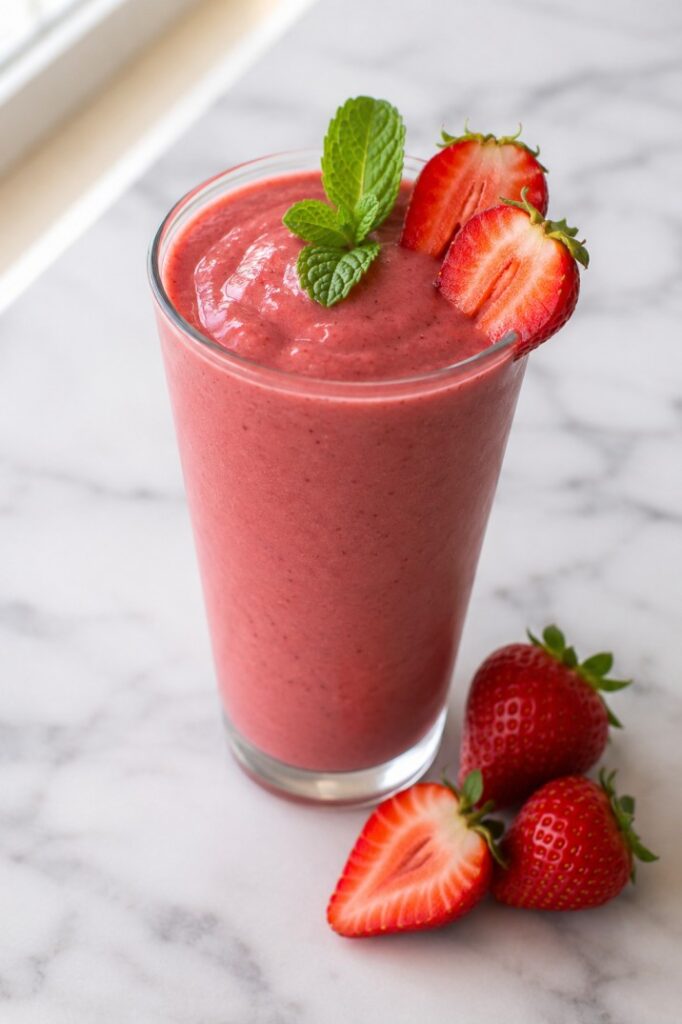
Prep time: 5 minutes | Serves: 1 | Approx. calories: 290 | Protein: 18g
This is the one I make most often and the one I recommend to everyone who tells me they do not like green smoothies. The spinach is completely invisible in both colour and flavour — the strawberries overwhelm it entirely — and yet it is doing meaningful work in there, contributing iron, magnesium, and the kind of chlorophyll-bound fiber that feeds the beneficial bacteria in your gut. The Greek yogurt is the protein backbone that makes this genuinely filling for two to three hours.
If you have been making smoothies with regular yogurt and wondering why they do not keep you full, Greek yogurt is the answer. Strained to remove the whey, it contains roughly double the protein of regular yogurt at the same calorie level. It also blends into a thick, creamy texture that makes the smoothie feel more substantial — more like something you have to slow down for than something you can drink in thirty seconds.
Ingredients
- 1 cup frozen strawberries
- 1 large handful of fresh spinach (about 1 cup packed)
- ¾ cup plain full-fat Greek yogurt — full-fat, not low-fat. Full-fat yogurt has more protein per calorie in many brands, blends more smoothly, and keeps you full significantly longer than low-fat versions which often compensate for the fat removal with added sugar. Read the label.
- ½ cup unsweetened almond milk — or any milk you have. Whole dairy milk adds more protein. Oat milk adds more carbohydrates. Use what fits your goals.
- 1 tablespoon chia seeds — these expand to roughly ten times their size when they absorb liquid, which means they continue creating fullness for an hour or more after you finish the smoothie. They have almost no flavour in a blended drink.
- ½ teaspoon vanilla extract
- 4 ice cubes
How to Make It
Add the almond milk to your blender first — liquid at the bottom helps the blade catch everything and prevents the dry ingredients from getting stuck. Add the spinach on top of the liquid, then the frozen strawberries, Greek yogurt, chia seeds, vanilla extract, and ice. Blend on high for 45 to 60 seconds until completely smooth. A high-speed blender will give you a silkier result, but a regular blender works fine if you blend for a full 60 seconds. Taste before pouring — if it needs more sweetness, add three or four frozen strawberries rather than sugar. Pour into a tall glass and drink within ten minutes for the best texture, before the chia seeds begin to gel noticeably.
Why it works for weight loss: Greek yogurt provides 18g of protein that directly suppresses hunger hormones for 2–3 hours. Spinach adds fiber and micronutrients at almost zero calorie cost. Chia seeds expand in the stomach and maintain fullness well after the smoothie is finished.
2. Green Apple Avocado and Spinach Flat Belly Smoothie
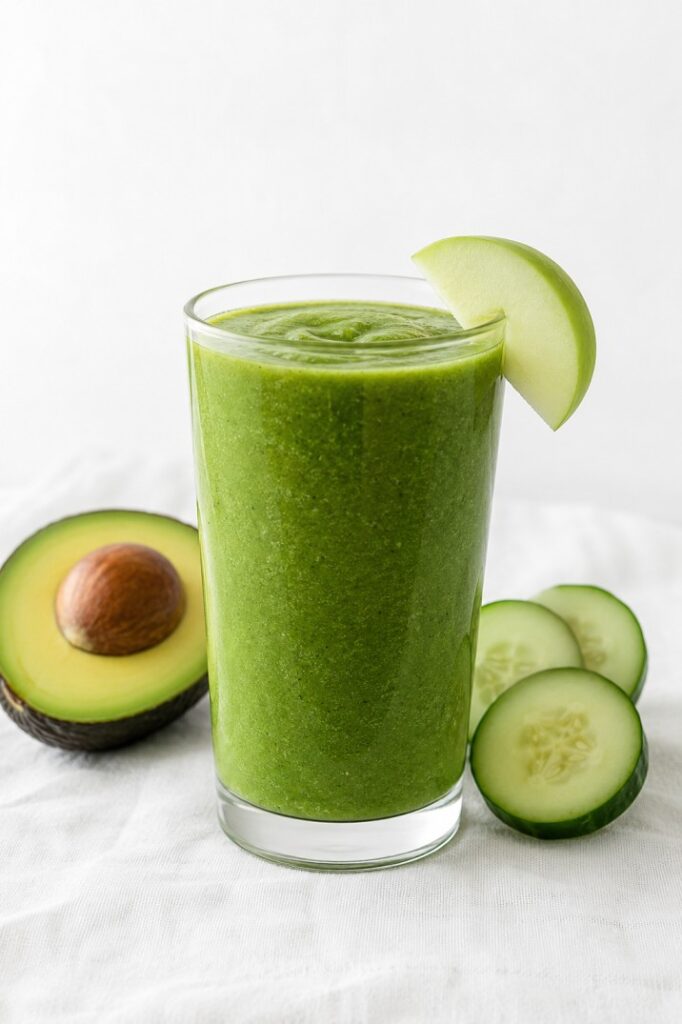
Prep time: 5 minutes | Serves: 1 | Approx. calories: 320 | Protein: 8g | Fiber: 11g
This is the smoothie for anyone who has been told that healthy fats help with weight loss and wondered what that actually means in practice. Avocado is the answer in the most direct possible way. Half an avocado in a smoothie creates a texture that is genuinely thick and creamy — nothing like the watery, thin consistency most people associate with green smoothies — and provides the kind of sustained fullness that fruit alone simply cannot. The monounsaturated fats in avocado slow gastric emptying significantly, which means the energy from this smoothie releases gradually over two to three hours rather than all at once.
Green apple is a deliberate choice over sweeter varieties. It is lower in natural sugar, higher in malic acid (which supports digestion and liver function), and its tartness cuts through the richness of the avocado in a way that makes the smoothie taste bright and fresh rather than heavy. The combination of apple and avocado sounds unlikely and tastes surprisingly elegant.
Ingredients
- ½ ripe avocado — the riper the better. An avocado that is just starting to feel soft under the skin blends much more smoothly than one that is still firm. If your avocado is perfectly ripe and you are not using it today, peel and freeze it — frozen avocado blends beautifully and chills the smoothie at the same time.
- 1 green apple, cored and roughly chopped (no need to peel)
- 2 large handfuls fresh spinach
- ½ banana, frozen — adds natural sweetness and creaminess without much sugar relative to the fiber it brings
- 1 cup cold water or unsweetened coconut water — coconut water adds electrolytes and a gentle tropical sweetness; plain water keeps the calorie count lower
- 1 tablespoon fresh lemon juice
- ½ teaspoon fresh ginger, grated — or a small frozen cube of ginger if you prep ahead
- 5 ice cubes
How to Make It
Add the liquid first. Add the spinach and let it sit in the liquid for ten seconds — this brief soak helps it blend more smoothly and prevents stringy bits of leaf from surviving the blade. Add the apple chunks, avocado, banana, lemon juice, ginger, and ice. Blend on high for 60 to 90 seconds. The avocado needs slightly longer blending time than most smoothie ingredients to fully emulsify — under-blended avocado leaves small chunks that ruin the texture. The finished smoothie should be a deep, vivid green and completely smooth. Drink immediately — avocado oxidises quickly and the colour will begin to dull within twenty minutes.
Why it works for weight loss: Avocado’s monounsaturated fats slow digestion and sustain fullness for hours. High fiber from apple, spinach, and banana regulates blood sugar and prevents the mid-morning crash. Ginger supports digestion and reduces bloating.
3. Banana Almond Butter and Oat Breakfast Smoothie
Prep time: 5 minutes | Serves: 1 | Approx. calories: 380 | Protein: 14g | Fiber: 8g
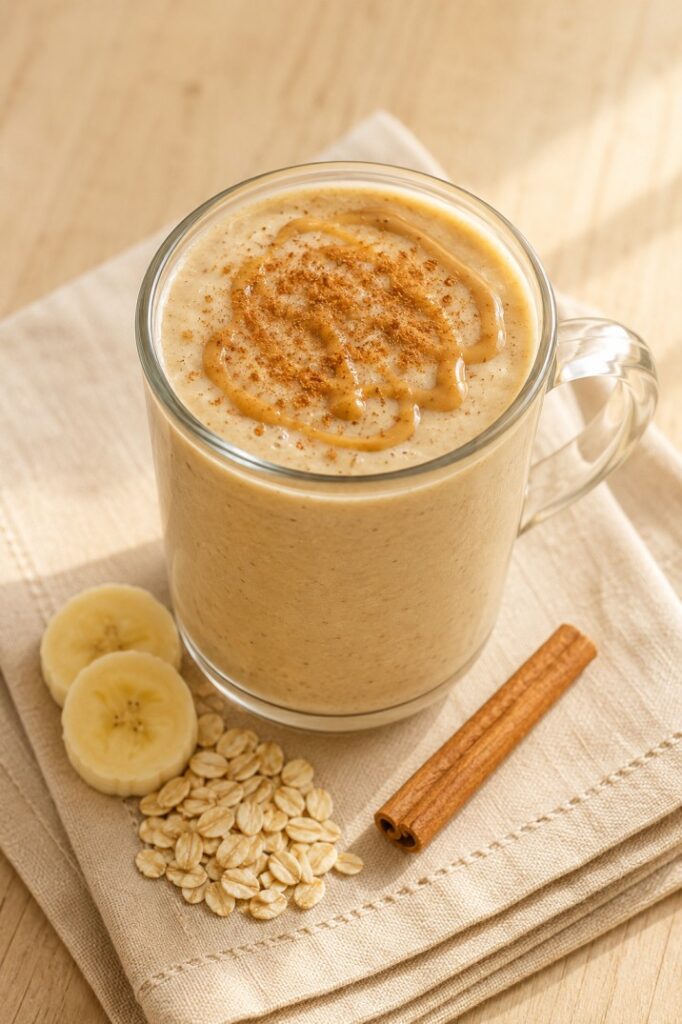
This is the most filling smoothie on this list and the one to reach for on mornings when you know you will not have time to eat again until lunch is well past. The combination of oats and almond butter together creates a smoothie that behaves more like a meal than a drink — the texture is thick enough to eat with a spoon if you reduce the liquid slightly, and it keeps most people full for a solid three to four hours.
Rolled oats in a smoothie is one of the best things no one tells you about when you start trying to eat better. They blend completely smoothly in a high-speed blender (use a standard blender? soak them in the milk for five minutes first), they add beta-glucan fiber which has been clinically studied for its effects on cholesterol and blood sugar regulation, and they give the smoothie a creaminess that you cannot get from frozen fruit alone. Almond butter adds healthy fat and a small but meaningful amount of protein, and the combination of the two makes this smoothie genuinely satisfying in the way that a bowl of oatmeal is satisfying — not just pleasant to drink, but actually filling.
Ingredients
- 1 frozen banana — freeze your bananas in chunks when they start to spot. Frozen banana is sweeter than fresh and gives smoothies the thick, almost ice cream-like texture that makes this one so good. Never throw a spotted banana away again.
- ¼ cup rolled oats — old-fashioned oats, not instant oats. Instant oats have been processed to cook faster, which means some of the fiber structure is already broken down. Old-fashioned oats blend better and contribute more fiber per serving.
- 2 tablespoons natural almond butter — check the label. Natural almond butter should contain one ingredient: almonds. Brands that add palm oil, sugar, or hydrogenated fats are not what you want here.
- ¾ cup unsweetened oat milk or whole dairy milk
- ½ teaspoon ground cinnamon — cinnamon has been studied for its effects on insulin sensitivity and blood sugar regulation. In a smoothie this sweet, it also adds a warm complexity that makes it taste more like a treat.
- 1 tablespoon ground flaxseed — adds omega-3 fatty acids and an extra gram of fiber with essentially no impact on flavour
- A pinch of sea salt — same logic as always. Salt at trace levels makes everything sweeter.
- 4 ice cubes
How to Make It
If you are using a standard blender rather than a high-speed model, add the oats and milk first and let them soak for five minutes before adding anything else. This softens the oats enough that a regular blender can handle them without leaving a grainy texture. If you have a high-speed blender, add everything at once: milk first, then oats, banana chunks, almond butter, cinnamon, flaxseed, salt, and ice. Blend on high for 60 to 75 seconds. The finished smoothie will be very thick — almost pourable rather than drinkable. Add another splash of milk if you prefer a lighter consistency, but resist the urge to thin it too much. The thickness is part of what makes it filling.
Why it works for weight loss: Oat beta-glucan fiber directly lowers post-meal blood sugar spikes and extends fullness. Almond butter and flaxseed provide healthy fats that sustain energy for hours. Cinnamon improves insulin sensitivity, reducing the likelihood of energy crashes and the cravings that follow them.
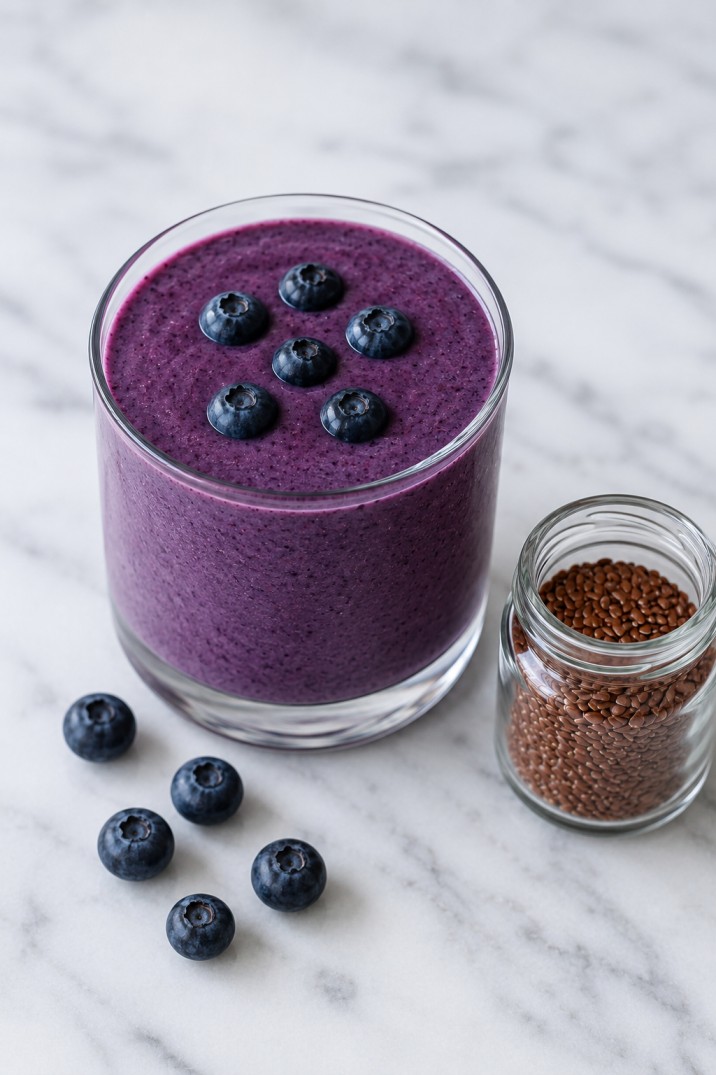
4. Blueberry Kefir and Flaxseed Gut Health Smoothie
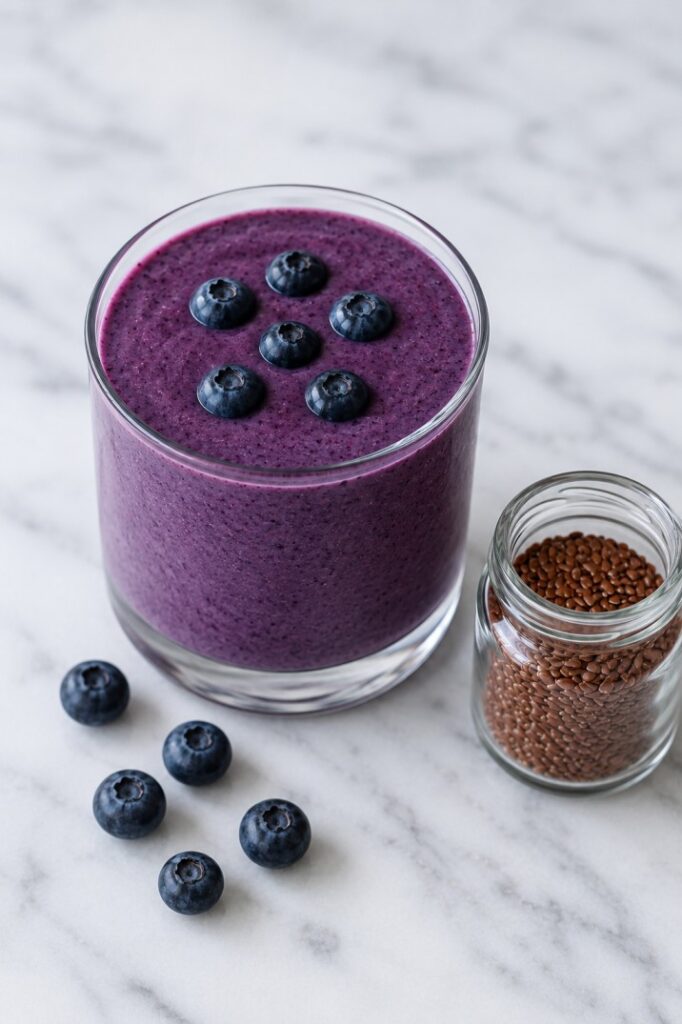
Prep time: 5 minutes | Serves: 1 | Approx. calories: 260 | Protein: 12g | Fiber: 7g
Most people think about weight loss purely in terms of calories in versus calories out, and while that framework is broadly correct, it misses something important: the state of your gut microbiome has a significant and well-documented effect on how efficiently your body processes food, how strongly it signals fullness after eating, and how much chronic low-grade inflammation is present in your digestive tract. Chronic gut inflammation is one of the most common underlying causes of persistent bloating — the kind that makes you feel heavy and uncomfortable regardless of what you eat.
This smoothie is built around two ingredients that directly support gut health in ways that show up in how you feel within a week of making them a regular part of your morning. Kefir is a fermented milk drink that contains significantly more probiotic strains than yogurt — typically ten to thirty-four active cultures compared to two or three in most commercial yogurts — and those live bacteria colonise and support the beneficial microbiome your digestion depends on. Flaxseed provides prebiotic fiber, which is the food those bacteria need to thrive. Together, they work at the foundation level. Blueberries add anthocyanins — the blue-purple pigment compounds that are among the most studied antioxidants in human nutrition, linked to reduced gut inflammation and improved fat metabolism.
Ingredients
- 1 cup frozen blueberries — frozen rather than fresh for two reasons. First, freezing breaks down cell walls, which makes the anthocyanins more bioavailable. Second, they chill and thicken the smoothie without needing ice.
- ¾ cup plain kefir — look for unsweetened or plain kefir, not flavoured. Flavoured kefir often contains as much sugar as a dessert. Plain kefir has a pleasant tangy flavour that works beautifully with blueberries.
- 1 tablespoon ground flaxseed — ground rather than whole. Whole flaxseeds pass through your digestive system largely intact, meaning your body cannot access the omega-3s or fiber inside them. Ground flaxseed releases everything.
- ½ cup frozen banana chunks — adds sweetness and creaminess without dominating the blueberry flavour
- 1 tablespoon raw honey or maple syrup (optional) — taste before adding. The banana and blueberries together are often sweet enough on their own, especially if the banana is very ripe.
- ½ cup cold water
How to Make It
Add the water and kefir to the blender first. Add the frozen blueberries, banana, ground flaxseed, and honey if using. Blend on high for 45 to 60 seconds. The blueberries will turn this a deep, vivid purple that looks almost artificially coloured — it is not, that is all anthocyanin. The texture will be thick and creamy from the kefir and banana. If it is too thick, add a small splash of water. Taste before serving — if it needs more brightness, a small squeeze of lemon lifts the whole flavour. Drink immediately.
Why it works for weight loss: Kefir’s live probiotic cultures restore and support gut microbiome function, improving digestion and reducing bloating. Ground flaxseed’s prebiotic fiber feeds those cultures. Blueberry anthocyanins reduce gut inflammation and support fat metabolism at the cellular level.
5. Pineapple Ginger and Turmeric Anti-Bloat Smoothie
Prep time: 5 minutes | Serves: 1 | Approx. calories: 250 | Protein: 9g | Fiber: 5g
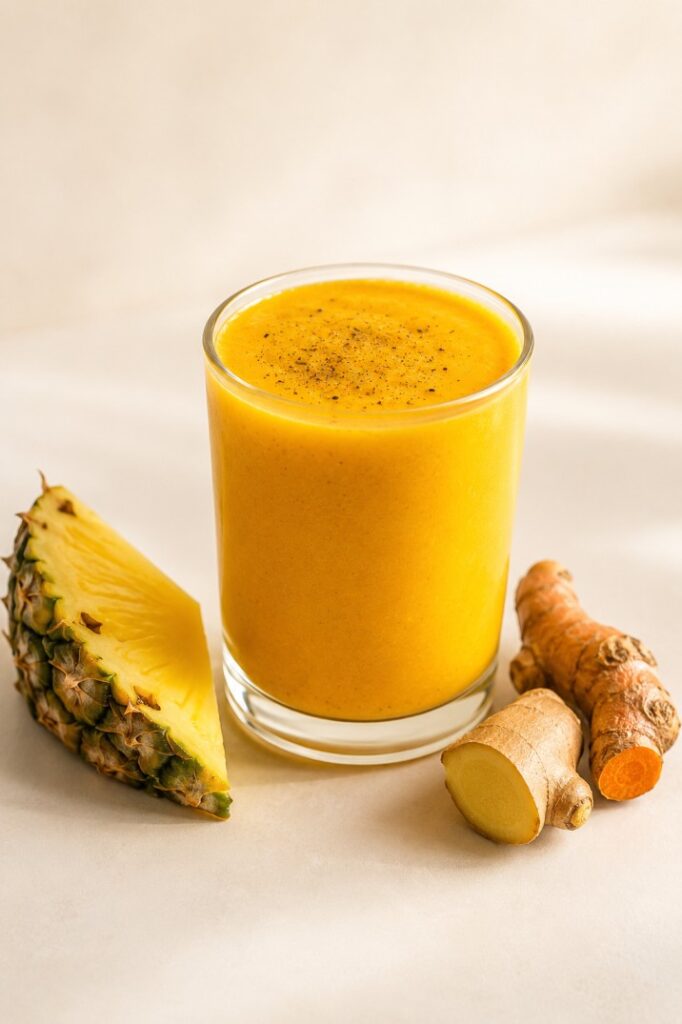
If you wake up most mornings feeling bloated and heavy before you have eaten anything — that persistent tightness that has nothing obvious to do with what you ate the night before — this is the smoothie to start with. It is not the most filling one on this list, but it is the one that will change how your stomach feels fastest, and once the bloating is under control, everything else becomes easier.
Pineapple contains bromelain, a proteolytic enzyme that breaks down proteins in your digestive tract. Your body does significant repair and cellular processing overnight, and some of the byproducts of that process contribute to the morning heaviness that most people blame on water retention or last night’s dinner. Bromelain helps clear that out. It is also one of the most powerful natural anti-inflammatory food compounds available — and chronic, low-grade inflammation in the gut is one of the main drivers of stubborn bloating that does not respond to diet changes. Ginger’s gingerols relax the smooth muscle in your intestinal wall, reducing the trapped gas that causes the uncomfortable tightness, and speed gastric emptying so that food moves through your system at the right pace. Turmeric’s curcumin reduces inflammatory markers directly. Add the black pepper — the piperine in it increases curcumin’s absorption into your bloodstream by up to 2,000 percent, and without it you are getting a fraction of the benefit.
Ingredients
- 1½ cups fresh pineapple chunks — fresh is essential here. Bromelain is a heat-sensitive enzyme that is destroyed by pasteurisation, which means tinned pineapple contains almost none of it. Fresh or freshly frozen pineapple only.
- 1-inch piece fresh ginger root, peeled — or half a teaspoon of ground ginger if fresh is not available, but fresh ginger has significantly more active gingerols
- ½ teaspoon ground turmeric — or a 1-inch piece of fresh turmeric root, peeled
- ½ cup plain full-fat Greek yogurt — adds protein and creaminess; also provides probiotics
- ½ cup coconut water — adds electrolytes and a light tropical sweetness that complements the pineapple
- 1 tablespoon raw honey
- A pinch of black pepper — do not skip this. It looks like an insignificant pinch. It is not. See above.
- 4 ice cubes
How to Make It
Add the coconut water first. Add the pineapple, ginger, turmeric, yogurt, honey, black pepper, and ice. Blend on high for 60 seconds. The finished smoothie will be a beautiful deep golden-orange, vivid and slightly opaque. Taste before drinking — the ginger can be quite sharp depending on the root, and if it is overpowering, add another quarter cup of pineapple. The flavour should be tropical and bright with a clean ginger warmth at the finish. Drink this one slowly — the bromelain is most effective when it has contact time with your digestive tract rather than being swallowed quickly.
Why it works for weight loss: Bromelain breaks down undigested proteins that contribute to bloating and heaviness. Ginger speeds gastric emptying and reduces trapped gas. Curcumin reduces chronic gut inflammation — the root cause of persistent bloating in many people. Reduced bloating means a visibly flatter stomach within days, which makes the other changes you are making feel real and sustainable.
6. Chocolate Peanut Butter and Banana Hunger-Killer Smoothie
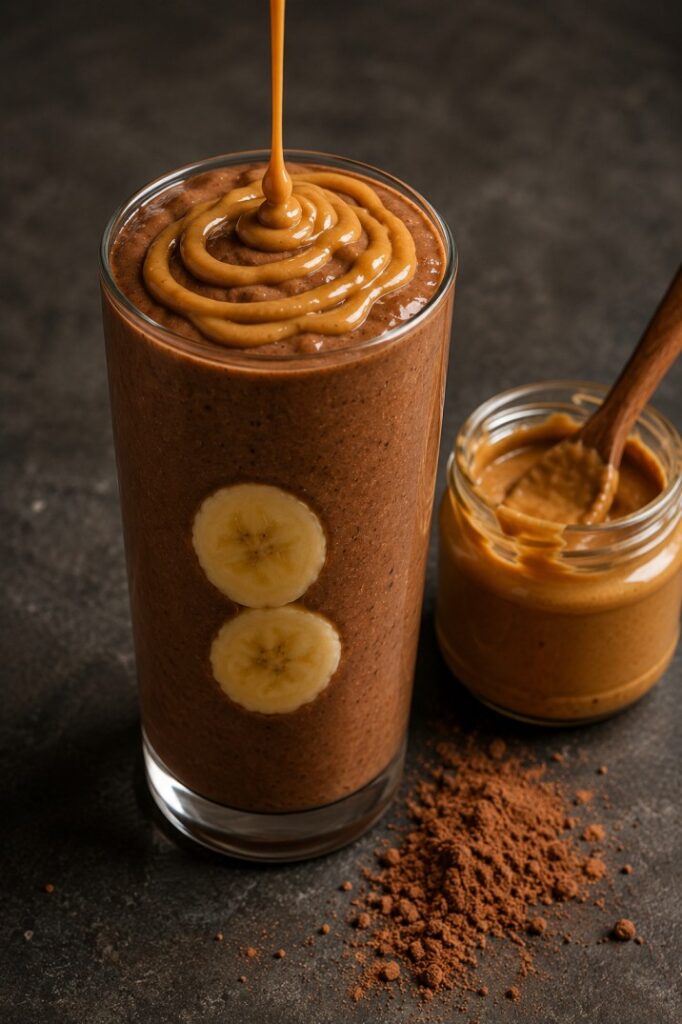
Prep time: 5 minutes | Serves: 1 | Approx. calories: 360 | Protein: 16g | Fiber: 6g
This is the smoothie for people who do not believe weight loss food is allowed to taste good. It tastes like a chocolate milkshake. It has sixteen grams of protein, six grams of fiber, and it will keep you full for three hours. Those things are not mutually exclusive and this smoothie is the proof.
The combination of peanut butter, banana, and cocoa is genuinely one of the great flavour pairings in everyday food, and the reason it works so well for weight loss is that each ingredient is doing structural work. Peanut butter provides healthy monounsaturated fat and protein; cocoa powder (unsweetened, not hot chocolate mix) adds iron, magnesium, and theobromine — a compound that has a gentle, sustained stimulant effect that supports focus and energy without the cortisol spike that coffee can cause; banana provides the natural sweetness and creaminess that makes this taste like a treat rather than a meal. Greek yogurt rounds it out with more protein and a slight tang that keeps the flavour from becoming cloying.
The key is using unsweetened cocoa powder rather than any kind of chocolate syrup, drinking chocolate, or hot cocoa mix. Those products are mostly sugar. Unsweetened cocoa powder is the actual ingredient — deeply chocolatey, slightly bitter, and packed with the compounds that make dark chocolate worth eating.
Ingredients
- 1 frozen banana — the riper it was before freezing, the sweeter the smoothie will be
- 2 tablespoons natural peanut butter — or almond butter if you prefer. Check the label: ingredients should be peanuts and possibly salt. That is it.
- 1½ tablespoons unsweetened cocoa powder — raw cacao powder is a slightly more nutritious alternative with a more complex, less bitter flavour
- ½ cup plain Greek yogurt
- ¾ cup unsweetened oat milk or whole dairy milk
- 1 tablespoon chia seeds
- ½ teaspoon vanilla extract
- A pinch of sea salt
- 4 ice cubes
How to Make It
Add the milk first, then the Greek yogurt, banana chunks, peanut butter, cocoa powder, chia seeds, vanilla extract, sea salt, and ice. Blend on high for 60 seconds. The colour should be a deep, glossy brown — if it looks pale or grey, your banana was not frozen thoroughly enough or your cocoa powder is low quality. Taste before serving. If it needs more sweetness, add half a ripe banana. If it needs more chocolate intensity, add another half tablespoon of cocoa. If it is too thick, add a splash of milk. This smoothie is best drunk through a wide straw or eaten partially with a spoon — the thickness is part of the experience.
Why it works for weight loss: High combined protein from peanut butter and Greek yogurt suppresses ghrelin (the hunger hormone) for hours. Banana fiber and chia seeds slow digestion and prevent blood sugar spikes. Cocoa’s theobromine provides sustained energy without a cortisol spike, reducing the stress-driven cravings that derail most diets.
7. Mango Coconut and Cottage Cheese Tropical Smoothie
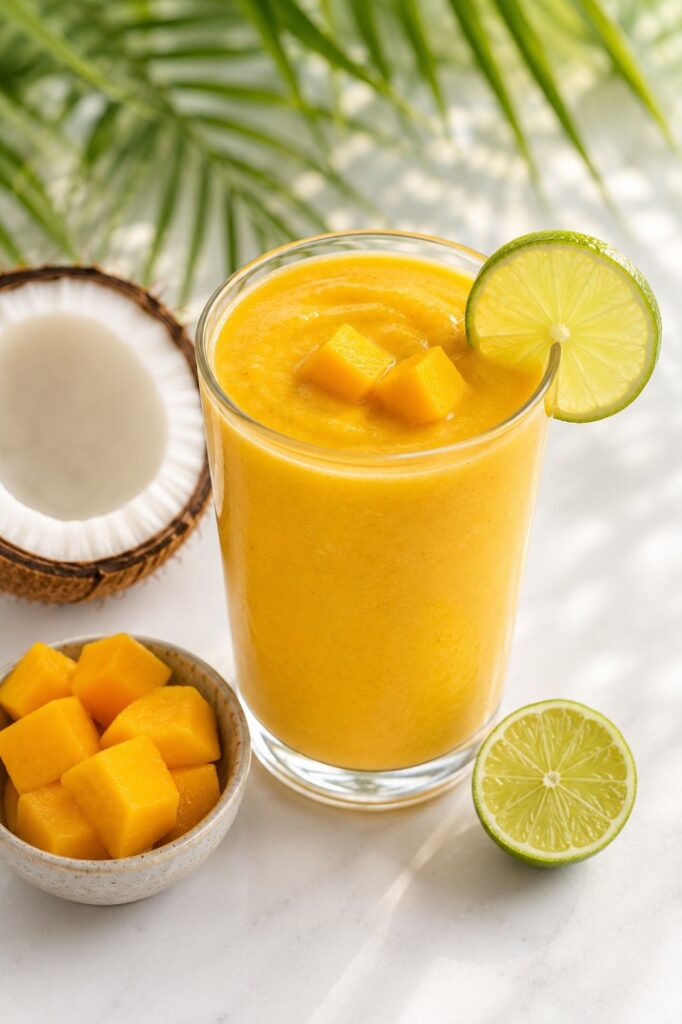
Prep time: 5 minutes | Serves: 1 | Approx. calories: 300 | Protein: 20g | Fiber: 4g
Cottage cheese in a smoothie sounds like the kind of thing a health influencer would suggest and then immediately apologise for. I resisted it for longer than I should have. Then I tried it, and I understood immediately why it has had a moment in 2025 and 2026 across every nutrition space that pays attention: blended cottage cheese is completely undetectable as cottage cheese. The texture is smooth and creamy in a way that is closer to Greek yogurt than to anything you would associate with the lumpy white stuff in a tub. And the protein content is extraordinary — a half cup of cottage cheese contains around fourteen to sixteen grams of protein, making it one of the most protein-dense whole food ingredients you can add to a smoothie without reaching for a supplement.
Mango brings sweetness, vitamin C, and beta-carotene — a fat-soluble antioxidant that your body converts to vitamin A and that supports immune function and skin health. Coconut water provides electrolytes, particularly potassium, which counteracts the sodium retention that causes puffy morning bloating. The lime juice brightens everything and prevents the mango from tasting flat.
Ingredients
- 1 cup frozen mango chunks — frozen mango is consistently good year-round in a way that fresh mango is not unless you are buying it in season. Frozen is fine and preferable here.
- ½ cup cottage cheese — full-fat, plain. Not low-fat — full-fat cottage cheese has a significantly better texture when blended and a richer flavour.
- ½ cup coconut water — not coconut milk, which is much higher in fat and calories. Coconut water is light and electrolyte-rich.
- Juice of half a lime
- ½ teaspoon vanilla extract
- ½ teaspoon ground turmeric (optional — adds anti-inflammatory benefits and a warm golden colour without changing the flavour meaningfully)
- 4 ice cubes
How to Make It
This is the one smoothie on the list where blending order really matters. Add the cottage cheese and coconut water to the blender first and blend on high for 20 to 30 seconds by themselves, until the cottage cheese is completely smooth with no visible curds. This step ensures the final smoothie has a perfectly creamy texture rather than any graininess. Then add the frozen mango, lime juice, vanilla, turmeric if using, and ice. Blend for another 45 to 60 seconds. The colour will be a warm, golden yellow — vivid and tropical. Taste before drinking. If the mango is very tart, add a small drizzle of honey. If the lime is not coming through, squeeze in a little more. Drink immediately.
Why it works for weight loss: Cottage cheese delivers 20g of complete protein per serving — among the highest of any smoothie ingredient without supplements — directly suppressing hunger for 3+ hours. Coconut water’s potassium reduces sodium-related water retention. Mango’s fiber and vitamin C support immune and digestive health.
How to Make Any Smoothie More Filling Without Adding Calories
These five additions can go into any of the smoothies above — or any smoothie you already make — and significantly increase how long it keeps you full without meaningfully affecting the calorie count.
Ground flaxseed (1 tablespoon): 3 grams of fiber, 2 grams of protein, omega-3 fatty acids. Essentially tasteless in a blended drink. Always use ground, not whole — whole flaxseeds pass through undigested.
Chia seeds (1 tablespoon): 5 grams of fiber, 2 grams of protein. They expand to up to 10 times their size in liquid, meaning they continue generating fullness for an hour or more after you finish the smoothie. Blend them in rather than stirring in after, and the texture difference is negligible.
Hemp seeds (2 tablespoons): 10 grams of protein, healthy omega-3 and omega-6 fatty acids. Mild, nutty flavour that complements fruit. One of the most protein-dense plant foods available.
Rolled oats (¼ cup): 4 grams of fiber, 3 grams of protein, beta-glucan that directly regulates blood sugar and cholesterol. Soak for five minutes in the liquid first if using a standard blender.
Spinach or kale (1 cup packed): Essentially zero calories, invisible flavour in fruit smoothies, meaningful contributions of iron, magnesium, folate, and the prebiotic fiber that feeds your gut bacteria. The colour will change; the taste will not.
Frequently Asked Questions
Do smoothies actually help with weight loss or are they just hype?
It depends entirely on what is in them. A smoothie built on whole fruits, a real protein source, fiber, and healthy fat is a genuinely useful weight loss tool — it replaces a calorie-dense processed breakfast with something nutrient-dense, filling, and fast. A smoothie built on fruit juice, flavoured yogurt, and lots of banana is essentially a high-sugar drink with very little to offer beyond the first twenty minutes. The recipes on this list are the former. The ones at most smoothie chains are the latter.
Can I meal prep these smoothies the night before?
Most of them, yes — with some caveats. The best approach is to prep your smoothie packs: portion all the solid ingredients (frozen fruit, spinach, seeds, oats) into individual ziplock bags or containers and freeze them. In the morning, dump the pack into the blender, add the liquid and any fresh ingredients, and blend. This takes about ninety seconds. The avocado smoothie should not be prepped ahead — avocado oxidises quickly even when frozen and the colour and flavour suffer. Smoothies with kefir or yogurt are fine to blend the night before and refrigerate, but drink within twelve hours.
How much protein do I actually need in a breakfast smoothie to stay full?
Research on satiety consistently points to a minimum of 15 to 20 grams of protein at breakfast to meaningfully suppress hunger hormones for two to three hours. Most of the smoothies on this list hit that range or close to it through the combination of Greek yogurt, cottage cheese, peanut butter, hemp seeds, or kefir — without any protein powder. If you want to push to the higher end of that range, add two tablespoons of hemp seeds to any of these recipes to add ten grams of protein with minimal impact on flavour.
Should I drink my smoothie fast or slow?
Slowly, always. Sipping a smoothie over ten to fifteen minutes gives your digestive system time to register what is coming in and respond by releasing the fullness hormones that tell your brain you have eaten. Drinking it in three minutes sends everything through too quickly for that signalling to happen properly — you feel full briefly and then hungry again much sooner than you should. If you are in a rush most mornings, pour your smoothie into a travel cup with a lid and sip it during your commute rather than drinking it standing at the kitchen counter.
What is the biggest mistake people make with weight loss smoothies?
Using fruit juice as the liquid instead of water, milk, or kefir. Fruit juice adds significant sugar without any of the fiber that makes whole fruit a good smoothie ingredient. A smoothie made with a cup of orange juice as the base has already added roughly 110 calories and 22 grams of sugar before any other ingredient goes in, and none of those calories come with fiber to slow their absorption. Use unsweetened milk, water, coconut water, or kefir. Your smoothie will taste just as good and keep you full significantly longer.
Looking to build on these smoothies with drinks that support gut health and digestion throughout the rest of your day? Our 7 Morning Detox Juices That Beat Bloating Fast cover the lighter, no-blender option for days when you want something less filling. And if staying hydrated between meals is something you struggle with, the 7 Best Infused Water Recipes for Weight Loss and Detox make drinking enough water something you will actually want to do.
About The Author
