
Most people know they should drink more water. Most people do not actually do it.
Plain water is boring. There is no way around that. You reach for it once, maybe twice, and then you forget about it for hours. And then at the end of the day you realize you have barely made a dent in what your body needed.
Infused water solves that problem without adding any calories, sugar, or effort. You take whatever fruit, herbs, or vegetables you have in your kitchen, drop them into a pitcher of cold water, wait a few hours, and the result is something you actually want to drink. Bright. Refreshing. Slightly flavored. And genuinely good for you because the ingredients you steep release real compounds — antioxidants, enzymes, and minerals — directly into the water.
I have been making infused water at home for over two years. These are the seven recipes I keep coming back to. Each one serves a specific purpose — some are built for bloating, some for metabolism, some just for deep hydration on hot days. All of them take under five minutes to prepare.
Pick one that appeals to you and try it for one week straight. See how you feel.
Why Infused Water Actually Works (and When to Drink It)
When fruit, herbs, and vegetables sit in cold water for several hours, they release water-soluble vitamins, essential oils, and plant compounds directly into the water. A cucumber releases silica and caffeic acid. Lemon releases vitamin C and d-limonene. Ginger releases gingerols. These are not huge amounts — infused water is not a supplement — but they are real, bioavailable compounds that your body uses.
More importantly: infused water makes you drink more water. That alone has a significant impact on how your body functions. Proper hydration improves digestion, reduces water retention, supports kidney function, and keeps your metabolism running efficiently. Most people walk around chronically mildly dehydrated without realizing it.
The best times to drink infused water:
- First thing in the morning, before breakfast, to rehydrate after sleep
- Between meals, to keep digestion moving and prevent false hunger signals
- During and after exercise, to replace electrolytes
- In the afternoon instead of reaching for a snack you do not actually need
1. Cucumber Lemon and Mint Flat Belly Water
Prep time: 5 minutes + 2 hours infusing | Serves: 4–6 glasses | Best for: Bloating, puffiness, morning hydration
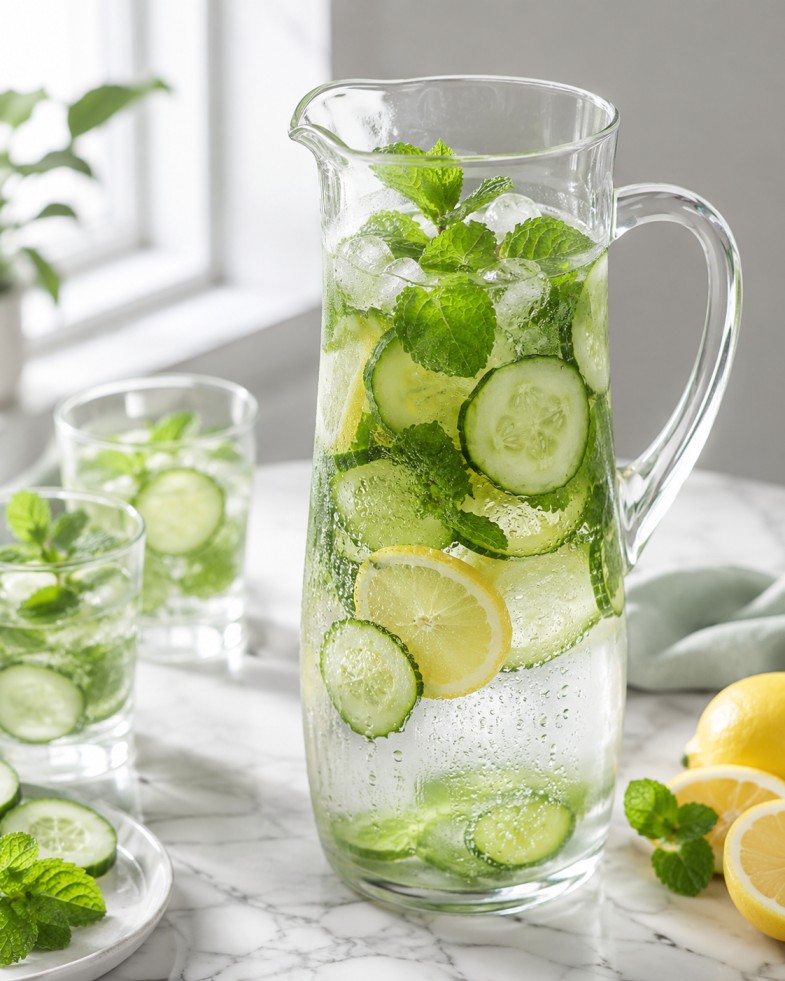
This is the classic for a reason. Cucumber, lemon, and mint is the combination that appears in every spa water carafe and hotel lobby pitcher — and it is not just for aesthetics. These three ingredients together are one of the most effective combinations for reducing morning puffiness and digestive bloat.
Cucumber is over 96 percent water, which makes it the most hydrating thing you can steep into a drink. It also contains cucurbitacin, which has been studied for its anti-inflammatory properties. Lemon adds vitamin C and citric acid, which supports liver detox pathways and gives the water a bright, sharp flavor that makes it genuinely refreshing. Mint contains menthol, which relaxes the smooth muscles of the digestive tract and reduces cramping and gas — the same reason mint tea is recommended for digestive discomfort.
Together, this water actively reduces the puffiness and tightness that most people feel in the morning before they start drinking fluids.
Ingredients
- 1 large cucumber, thinly sliced
- 1 lemon, thinly sliced (unwaxed if possible)
- 1 large handful of fresh mint leaves (about 15–20 leaves)
- 1.5 liters of cold filtered water
- Ice cubes to serve
How to Make It
Add the cucumber and lemon slices to a large pitcher. Gently crush the mint leaves between your palms before adding them — this breaks the cell walls slightly and releases the menthol oils much more efficiently into the water. Fill with cold water. Stir gently and refrigerate for at least 2 hours, or overnight for a stronger flavor. Serve over ice and refill the pitcher with water once before discarding the fruit.
Why it works for bloating: Cucumber’s anti-inflammatory compounds reduce tissue puffiness. Lemon stimulates liver detox. Mint directly relaxes intestinal muscle walls and relieves trapped gas.
2. Strawberry Basil and Lemon Metabolism Water
Prep time: 5 minutes + 2 hours infusing | Serves: 4–6 glasses | Best for: Metabolism support, weight loss, afternoon energy
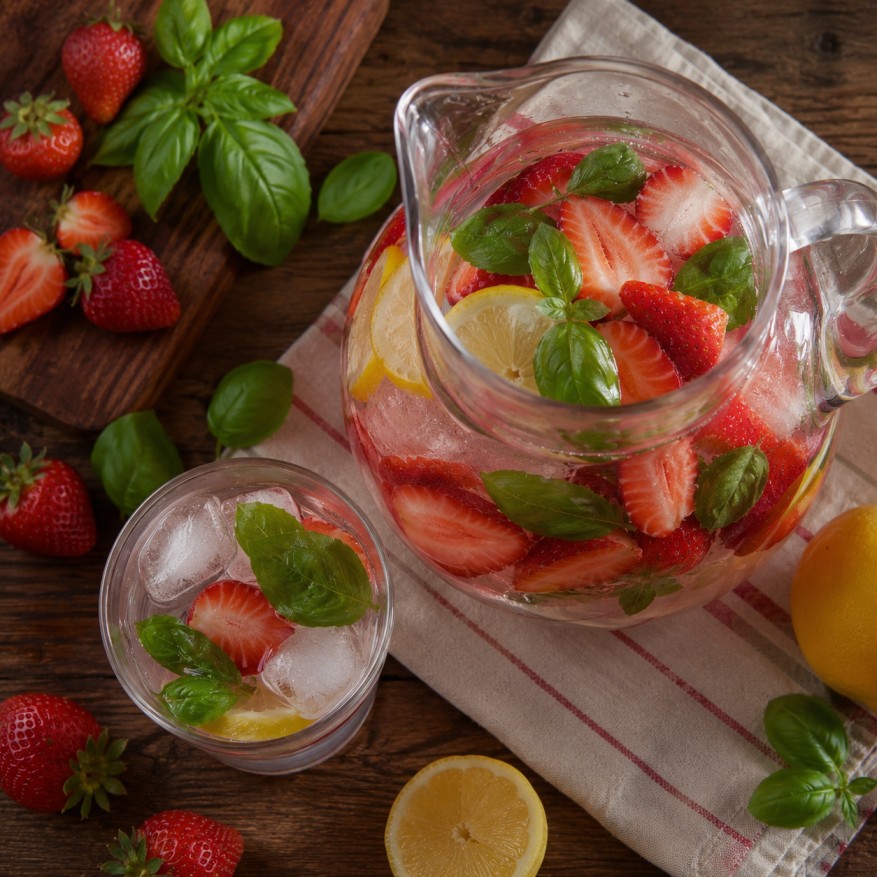
This is the prettiest water on the list and the one guests always ask about first. The deep red of the strawberries bleeding into the water, with the dark green basil leaves floating through it — it looks like something from a restaurant. It also happens to be one of the most effective combinations for metabolism support.
Strawberries are rich in anthocyanins, the antioxidants that give them their red color and that research has linked to improved fat metabolism and reduced inflammation. They also contain polyphenols that feed beneficial gut bacteria — and gut bacteria have a direct relationship with how efficiently your body processes food. Basil contains eugenol and rosmarinic acid, both of which have been studied for their effects on blood sugar regulation. Stable blood sugar means fewer energy crashes and fewer cravings. Lemon rounds it out with vitamin C that helps your body absorb the antioxidants from the strawberries more completely.
This is the water I drink in the afternoon when I want something that feels indulgent but is actually doing something useful.
Ingredients
- 1 cup fresh strawberries, hulled and sliced
- 10–12 fresh basil leaves
- 1 lemon, thinly sliced
- 1.5 liters of cold filtered water
- Ice and extra strawberries to serve
How to Make It
Hull and slice the strawberries in half. Thinly slice the lemon. Add both to your pitcher. Gently tear — do not chop — the basil leaves and add them in. Torn leaves release their oils better than whole leaves without turning bitter the way cut leaves can. Fill with cold water and refrigerate for at least 2 hours. The water will turn a beautiful pale pink as the strawberry anthocyanins bleed into it. Serve over ice.
Why it works for metabolism: Strawberry anthocyanins support fat metabolism. Basil regulates blood sugar response. Lemon improves antioxidant absorption. The combination reduces cravings by keeping blood sugar stable.
3. Apple Cinnamon and Ginger Detox Water
Prep time: 5 minutes + 3 hours infusing | Serves: 4–6 glasses | Best for: Detox, blood sugar balance, warming in cooler weather
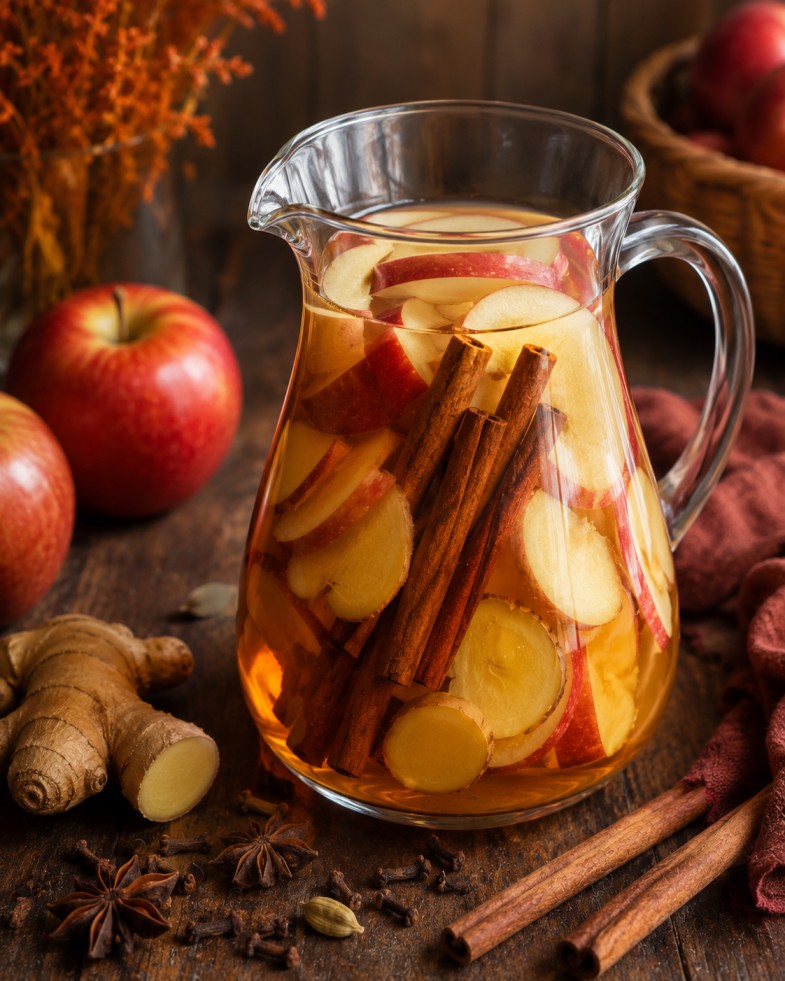
If you have ever wondered whether infused water has to be cold and summery — it does not. This combination is warm, spiced, and almost autumnal. It is the infused water that people who say they do not like infused water always end up loving.
Apple contains quercetin and pectin, two compounds that have real effects on your gut microbiome. Pectin is a prebiotic fiber that feeds the beneficial bacteria in your colon — bacteria that produce short-chain fatty acids that reduce inflammation and improve your body’s ability to manage fat storage. Quercetin is one of the most studied antioxidants in human nutrition. Cinnamon contains cinnamaldehyde, which has been shown in multiple clinical trials to improve insulin sensitivity and reduce fasting blood sugar. Ginger adds gingerols and shogaols — released into the water even during cold infusion — which reduce gut inflammation and support digestion.
This water is particularly useful drunk in the morning or before meals if you are trying to manage energy levels and reduce sugar cravings.
Ingredients
- 2 red apples, cored and thinly sliced
- 2 cinnamon sticks (do not use ground cinnamon — it clouds the water)
- 1-inch piece of fresh ginger, peeled and thinly sliced
- 1.5 liters of cold filtered water
- Optional: 2–3 star anise for a deeper spiced flavor
How to Make It
Core and thinly slice the apples — no need to peel them, the skin contains extra quercetin. Peel and thinly slice the ginger. Add the apples, ginger, cinnamon sticks, and star anise if using to your pitcher. Fill with cold water. This one needs a longer infusion than the others — refrigerate for at least 3 hours, and overnight gives the best result. The water will turn a pale amber and smell genuinely like apple pie. Refill once before discarding.
Why it works for detox: Apple pectin feeds beneficial gut bacteria. Cinnamon improves insulin sensitivity and reduces sugar cravings. Ginger supports liver detox pathways and reduces gut inflammation.
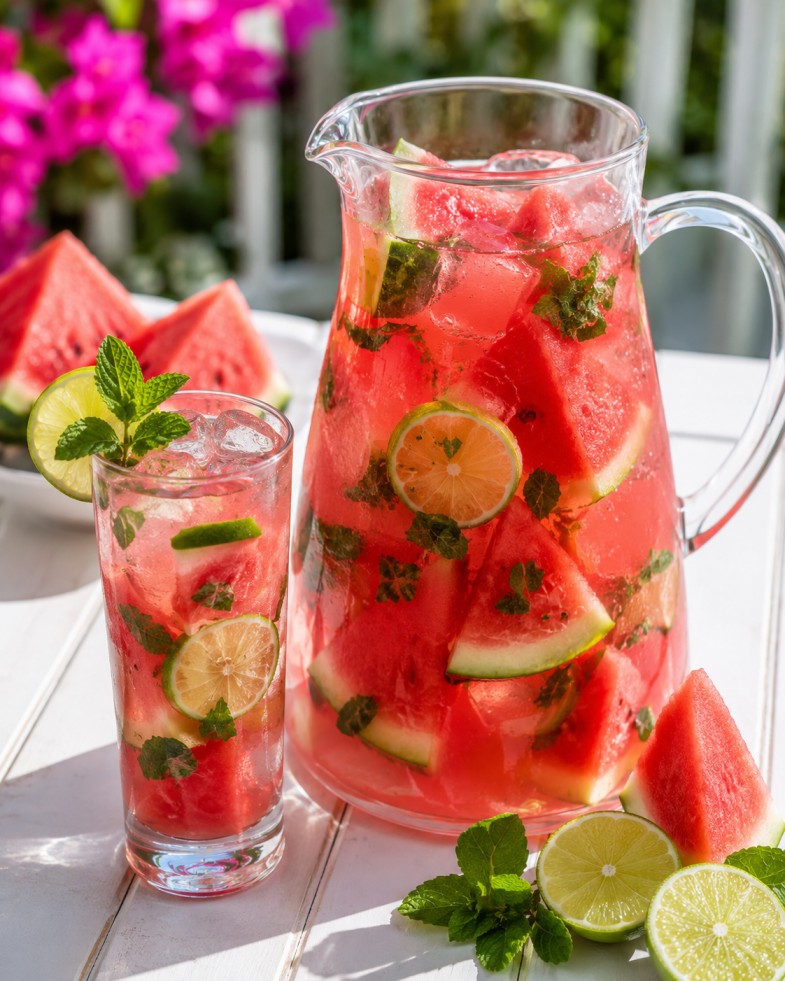
4. Watermelon Mint and Lime Summer Flush Water
Prep time: 5 minutes + 1–2 hours infusing | Serves: 4–6 glasses | Best for: Dehydration, post-workout recovery, hot weather bloating
This is the most hydrating water on the list and the one I make every single day in summer. It is also the fastest to infuse — watermelon releases its juice into the water very quickly, so you can be drinking it within an hour.
Watermelon is 92 percent water, but that is not what makes it special here. It contains L-citrulline, an amino acid that your body converts into L-arginine, which improves circulation and helps reduce the muscle soreness that follows exercise. It also reduces the fluid retention that shows up as heaviness in the legs and stomach on hot days. Mint adds its digestive-relaxing menthol, and lime adds a hit of vitamin C and citric acid that brightens the whole flavor dramatically.
This is the water that turns non-water-drinkers into water drinkers. The flavor is bold enough that it feels like you are drinking something special.
Ingredients
- 3 cups seedless watermelon, cut into cubes or triangles
- 1 large handful of fresh mint leaves (about 15–20 leaves)
- 2 limes, thinly sliced
- 1.5 liters of cold filtered water
- Ice and extra watermelon to serve
How to Make It
Cut the watermelon into large cubes or triangles — do not blend it, you want the pieces intact so the water stays clear and the fruit can be refilled. Thinly slice the limes. Crush the mint leaves between your palms. Add everything to a pitcher, fill with cold water, and refrigerate for 1 to 2 hours. The water turns a beautiful pale pink almost immediately. Serve over ice and refill the pitcher one more time before discarding the fruit.
Why it works for hydration and bloating: L-citrulline in watermelon improves circulation and reduces fluid retention. Mint relaxes intestinal muscles. Lime vitamin C supports fluid balance and liver function.
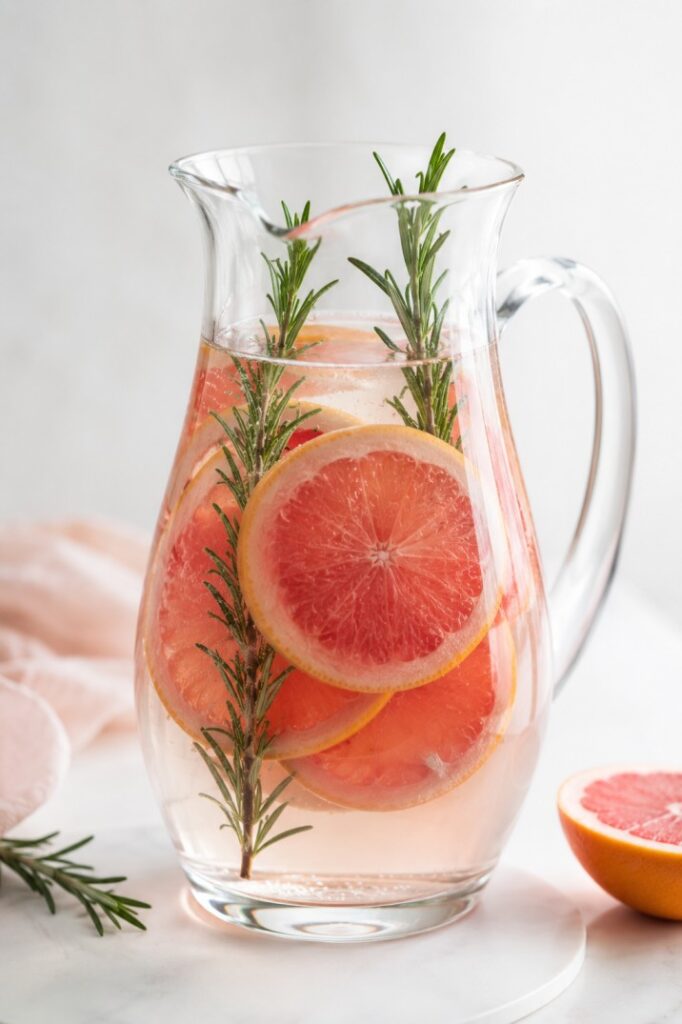
5. Grapefruit and Rosemary Fat-Burning Water
Prep time: 5 minutes + 2–3 hours infusing | Serves: 4–6 glasses | Best for: Weight loss support, appetite management, lymphatic drainage
This is the most unexpected combination on the list and the one that surprises people the most when they taste it. Rosemary in water sounds strange until you try it — it gives the water a slightly herbaceous, almost floral depth that pairs with grapefruit’s bitterness in a way that tastes genuinely sophisticated.
Grapefruit contains naringenin, a flavonoid that has been studied for its effect on metabolism. Naringenin activates AMPK, an enzyme that regulates fat burning in cells — the same pathway that exercise activates. It also contains nootkatone, a compound that has been linked to reduced appetite and improved energy metabolism. Rosemary contains carnosic acid and rosmarinic acid, both of which support the lymphatic system — the drainage network that removes cellular waste and excess fluid from tissues. When your lymphatic system is sluggish, you tend to feel heavy and puffy even when your diet is good.
Note: if you take any medications, check with your doctor before drinking grapefruit water regularly, as grapefruit can interact with certain drugs including statins and some blood pressure medications.
Ingredients
- 1 large grapefruit, thinly sliced (pink or ruby red for sweetness)
- 4–5 fresh rosemary sprigs
- 1 lemon, thinly sliced
- 1.5 liters of cold filtered water
- Raw honey to taste if the bitterness is too strong
How to Make It
Thinly slice the grapefruit and lemon. Lightly bruise the rosemary sprigs by pressing them against a cutting board with the heel of your hand — this releases the aromatic oils without stripping the leaves. Add the grapefruit, lemon, and rosemary to your pitcher. Fill with cold water and refrigerate for 2 to 3 hours minimum. The bitterness mellows significantly with time. If the flavor is still too strong, add a small drizzle of raw honey and stir before serving.
Why it works for weight loss: Grapefruit naringenin activates fat-burning enzymes. Nootkatone reduces appetite signals. Rosemary supports lymphatic drainage and reduces water retention.
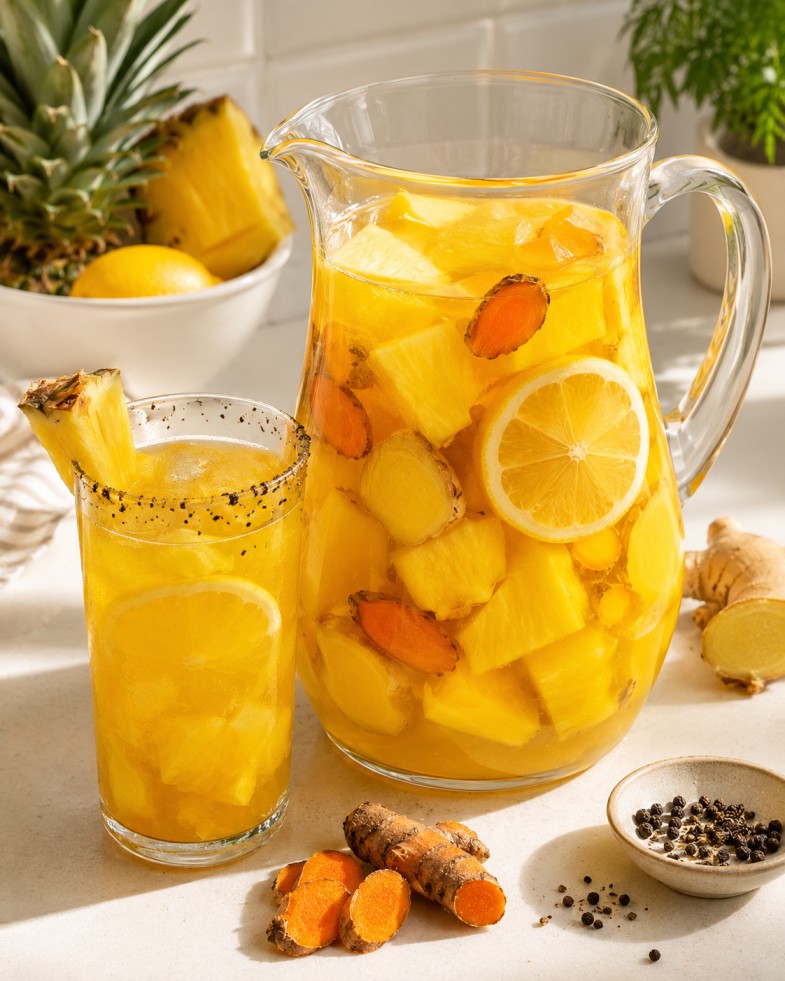
6. Pineapple Ginger and Turmeric Anti-Bloat Water
Prep time: 5 minutes + 2 hours infusing | Serves: 4–6 glasses | Best for: Chronic bloating, gut inflammation, post-meal heaviness
This is the most powerful anti-inflammatory combination on the list. Pineapple, ginger, and turmeric together create a water that looks beautiful — golden yellow, almost glowing — and that works on the chronic low-grade gut inflammation that causes persistent bloating in a way that most infused waters simply do not.
Pineapple contains bromelain, an enzyme that breaks down proteins in the digestive tract. Even in cold-infused water, bromelain leaches out of the pineapple flesh and remains active. Ginger adds gingerols that relax the intestinal wall and speed gastric emptying — how fast food moves from your stomach into your small intestine. Slow gastric emptying is one of the main causes of that heavy, tight feeling after meals. Turmeric contains curcumin, which directly reduces inflammatory markers in gut tissue. Add a pinch of black pepper to your glass when serving — piperine in black pepper increases curcumin absorption dramatically.
Ingredients
- 2 cups fresh pineapple chunks (not canned — heat processing deactivates bromelain)
- 1-inch piece fresh ginger, peeled and thinly sliced
- 1-inch piece fresh turmeric root, peeled and thinly sliced (or ½ tsp ground turmeric)
- 1 lemon, thinly sliced
- 1.5 liters of cold filtered water
- Pinch of black pepper per glass when serving
How to Make It
Cut the pineapple into medium chunks. Peel and slice both the ginger and turmeric. Add everything to your pitcher along with the lemon slices. Fill with cold water. The turmeric will turn the water a beautiful golden color within an hour. Refrigerate for at least 2 hours. Stir well before serving and add a pinch of black pepper to each glass. Use glass or stainless steel for this one — turmeric will permanently stain plastic pitchers.
Why it works for chronic bloating: Bromelain breaks down undigested proteins. Ginger speeds gastric emptying and relaxes intestinal walls. Curcumin reduces gut inflammation. Black pepper makes the curcumin bioavailable.
7. Blueberry Orange and Lavender Antioxidant Water
Prep time: 5 minutes + 3 hours infusing | Serves: 4–6 glasses | Best for: Antioxidant support, stress and cortisol, evening wind-down
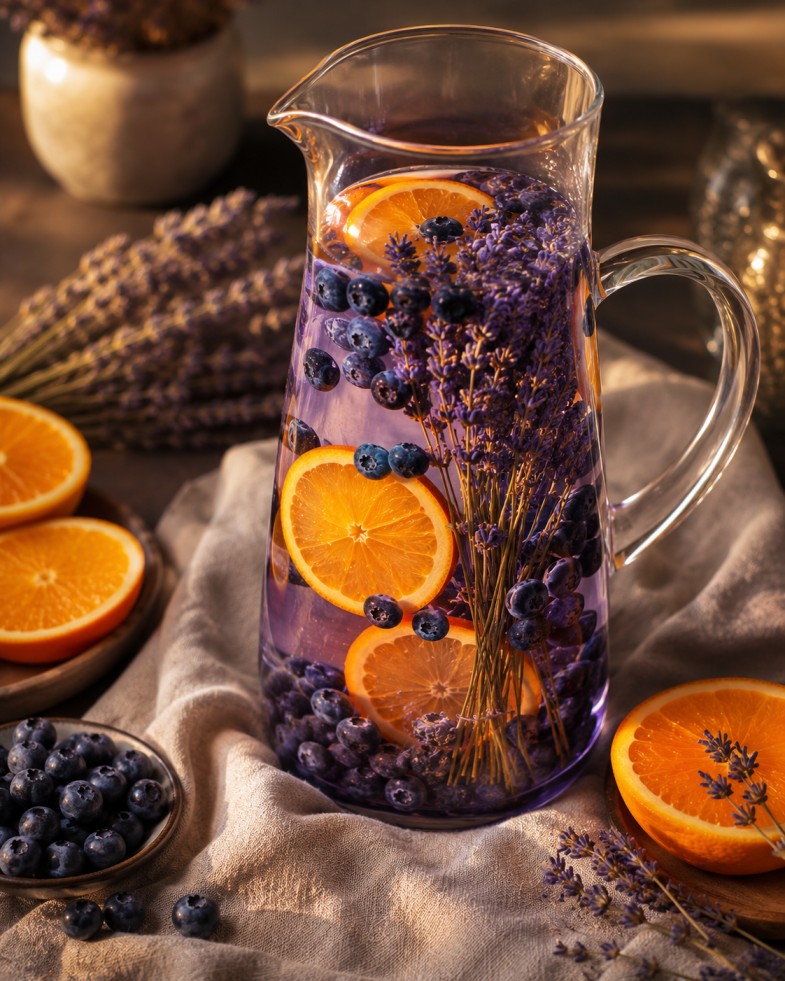
This is the most elegant water on the list and the one that feels the most like a treat. The pale purple color of blueberries mixing with the orange gives the water a color that is almost impossible to describe — somewhere between rosé and violet. It is genuinely beautiful in a clear glass.
Blueberries contain the highest antioxidant load of any common fruit. Their anthocyanins leach into cold water within a couple of hours and give the water both its color and its antioxidant benefit. High antioxidant intake is directly linked to reduced oxidative stress, which is one of the main drivers of chronic inflammation. Oranges add vitamin C and hesperidin, a flavonoid that improves blood vessel flexibility and circulation. Lavender is the surprise ingredient. Culinary lavender contains linalool, a compound that has been studied for its effects on the nervous system — it gently lowers cortisol, which is why lavender is used in so many sleep and relaxation products. In water, this effect is subtle but real: this water has a calming quality that makes it particularly good in the evening.
Use only food-grade or culinary lavender — not dried flower sachets or essential oil.
Ingredients
- 1 cup fresh blueberries, lightly crushed
- 2 large oranges, thinly sliced
- 1 tablespoon dried culinary lavender (food-grade only)
- 1.5 liters of cold filtered water
- Fresh blueberries and orange slices to serve
How to Make It
Lightly crush the blueberries with a fork or the back of a spoon — just enough to break the skins and release the anthocyanins. Thinly slice the oranges. Add the blueberries, orange slices, and lavender to your pitcher. Fill with cold water. This one needs at least 3 hours to infuse — overnight is ideal, as the blueberry color deepens significantly and the lavender mellows into something subtle rather than floral. Strain before serving if you used loose lavender. Serve in a clear glass to show off the color.
Why it works for antioxidants: Blueberry anthocyanins reduce oxidative stress and inflammation. Orange hesperidin improves circulation. Culinary lavender lowers cortisol and supports the parasympathetic nervous system — the state your body needs to digest and recover properly.
How to Get the Most Out of These Recipes
Use a large clear pitcher. Presentation matters more than you would think. When you can see the fruit and herbs floating in the water, you are far more likely to actually drink it. A 1.5 to 2 liter clear glass pitcher is ideal. Avoid plastic — turmeric and citrus will stain it permanently, and low-quality plastics can leach compounds into the water.
Always use cold infusion, not warm. Cold water is the correct method for all of these recipes. Warm water speeds infusion but destroys heat-sensitive enzymes like bromelain, degrades the volatile aromatic compounds in mint and basil, and makes citrus pith leach excessive bitterness. Cold infusion is slower but produces a cleaner, brighter flavor and preserves more of the active compounds.
Refrigerate — never leave at room temperature. Infused water left out for more than two hours should be discarded. The fruit begins to ferment and bacteria can grow on the surface of the ingredients. Always refrigerate and consume within 24 hours.
Refill once before discarding. Most of these combinations can be refilled once — top the pitcher with fresh cold water after the first batch and let it infuse for another hour or two. The second infusion is lighter but still works. After that, discard the fruit.
Use filtered water when possible. Tap water contains chlorine and minerals that interfere with the subtle flavors of herb and floral recipes. If you do not have a filter, let tap water sit in an open pitcher for 30 minutes before adding your ingredients — most of the chlorine will dissipate.
Frequently Asked Questions
How long does infused water need to sit before drinking? Most fruit infusions need a minimum of 1 to 2 hours. Herbs like mint and basil infuse faster — sometimes within 30 to 45 minutes. Spices like cinnamon and whole ginger need 3 hours or overnight. When in doubt, overnight in the refrigerator gives the best flavor and the most consistent infusion across all the recipes on this list.
Does infused water actually help with weight loss? Infused water does not burn fat directly. What it does is make it significantly easier to drink enough water throughout the day, and adequate hydration has a direct effect on metabolism, appetite regulation, and the body’s ability to flush metabolic waste. The specific ingredients in these recipes — grapefruit naringenin, cinnamon cinnamaldehyde, strawberry anthocyanins — do have metabolic effects supported by research. Think of infused water as a foundation that supports weight loss rather than a shortcut to it.
Can I eat the fruit after infusing? You can, but it will taste very flat since most of the flavor compounds have leached into the water. Watermelon and strawberries hold up better than citrus. Cucumber slices are pleasant to snack on. Herbs and spices are not worth eating after infusion.
How many glasses of infused water should I drink per day? The same as plain water — aim for 6 to 8 glasses (around 1.5 to 2 liters) per day. Infused water counts toward your daily fluid intake exactly the same way plain water does. There is no upper limit worth worrying about for any of these recipes.
Can I add sweetener to infused water? A small drizzle of raw honey works well without significantly affecting the benefits. Avoid refined sugar, which spikes insulin and counteracts some of the metabolic benefits. Avoid artificial sweeteners, which can disrupt gut bacteria. If you need more sweetness, add extra fruit slices or a cinnamon stick.
Can I use frozen fruit? Yes — frozen fruit actually works slightly better than fresh for cold infusion because the freezing process breaks down cell walls, releasing flavor and color compounds into the water faster. Frozen blueberries are particularly effective. Add straight from frozen and allow an extra 30 minutes of infusion time.
Is infused water safe during pregnancy? Most of these recipes are safe in reasonable amounts, but a few ingredients deserve caution. High amounts of ginger should be avoided in the first trimester. Rosemary in large amounts is not recommended during pregnancy. If you are pregnant, speak with your midwife or doctor before drinking any of the more strongly flavored infusions regularly.
Looking for something with more concentrated flavor and immediate digestive impact? Try these 7 Morning Detox Juices That Beat Bloating Fast — no juicer needed.
About The Author
